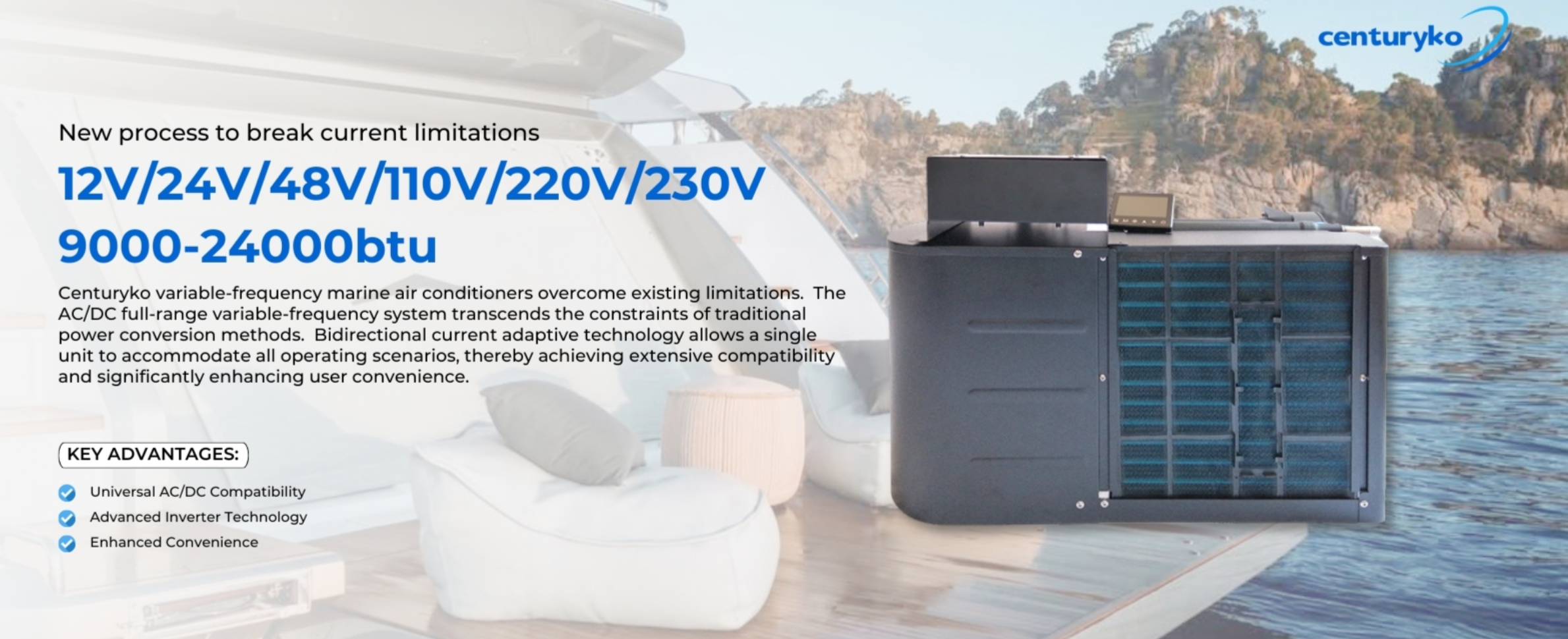
User-first primer: why isolation matters on small passenger craft
Boat owners and operators notice vibration and tonal noise the moment a compressor spins up — passengers feel it, crew hears it. Proper isolation for a marine 12v air conditioner changes the experience: lower radiated noise, fewer cosmetic rattles, and less fatigue for the hull structure. This matters for yachts, day-charter boats, and commuter ferries that fit compact systems; good installation practices for marine air conditioning units and smart placement of portable marine air conditioner units are where quieter cabins start.
Practical anatomy: what transmits noise into the cabin
There are three mechanical paths: structure-borne vibration through compressor mounts and hull panels, airborne noise through thin bulkheads and ducts, and secondary excitation via connected pipework. A focused teardown shows the usual suspects — loose isolation mounts, hard-mounted brackets, and unsupported ductwork that converts low-frequency vibration into audible rumble. Addressing each path stops the problem at source rather than masking it with more insulation.
Installation checklist for user-level reliability
Start with the foundation: use rated isolation mounts under the compressor and secure the assembly to a reinforced stringer or baseplate. Add flexible hose loops and properly selected refrigerant lines to decouple the unit from the hull. Keep the evaporator box stable but acoustically buffered with foam pads sized for dredge and shipboard loading — not just home-AC foam. Attention to details like torque on bracket fasteners and routing of condensate lines reduces micro-vibrations that amplify into cabin noise.
Operational teardown: balancing performance and quiet
When you inspect a marine 12v air conditioner or a 12V marine AC during commissioning, verify three measured parameters: vibration transmissibility at mounting frequency, sound pressure level (SPL) in critical cabin zones, and compressor run-cycle harmonics under typical load. Use a handheld accelerometer on the mounting plate and an SPL meter at ear height while varying fan speeds. These numbers guide whether you need softer isolators, additional mass damping, or duct attenuators to suppress airborne tonal peaks.
Common mistakes and how to avoid them
Installers often undersize isolation mounts to save space or overconstrain the unit with metal straps. Another frequent error is routing rigid refrigerant lines so they bear load — that transmits vibration directly. There’s also a temptation to add more insulation inside cavities without treating the vibration source. Fix the mount first, then the duct; otherwise you’re only trading one problem for another. — Small fixes early save larger retrofits later.
Real-world anchor: a measured retrofit in the Florida Keys
On a 60-foot catamaran operating around the Florida Keys I documented persistent cabin rumble during peak AC cycles. After swapping to anti-vibration compressor mounts, adding a laminated mass pad under the baseplate, and replacing straight copper runs with flexible hoses, SPL dropped by 6–8 dB in the saloon and passenger complaints stopped. This user-driven retrofit shows how targeted isolation and modest material changes deliver tangible comfort gains without oversized systems.
Component-level terms to keep handy
When specifying parts, use correct nomenclature: compressor mounts (load rating, natural frequency), isolation mount ( Shore A hardness, deflection), and duct attenuator (insertion loss at 125–500 Hz). Keep a short parts list with rated dynamic load and expected lifecycle; these figures matter more than optimistic marketing copy.
Advisory: three golden rules for selection and verification
1) Measure before buying: baseline SPL and accelerometer readings set realistic targets for isolation performance. 2) Match mount stiffness to unit mass and expected excitation frequency — underspec or overspec both degrade attenuation. 3) Validate installation under operational load, not just idle tests; compressor harmonics during peak heat load reveal resonance that static checks miss.
For onboard solutions that combine engineered isolation and compact form factors, ZhuoliMarine integrates design choices that reduce installation guesswork while preserving cooling capacity. Practical, tested, effective.