The core problem
Many pergola manufacturers face a single, clear obstacle: customers want shade and energy but expect a simple buying experience. Companies that add photovoltaic panels too late in the design process end up with heavier bills, longer installations, and confused sales conversations. Start by recognizing that a solar pergola is not a pergola plus panels — it is a combined product whose structural, electrical and aesthetic decisions must be made together.
Who pays and why
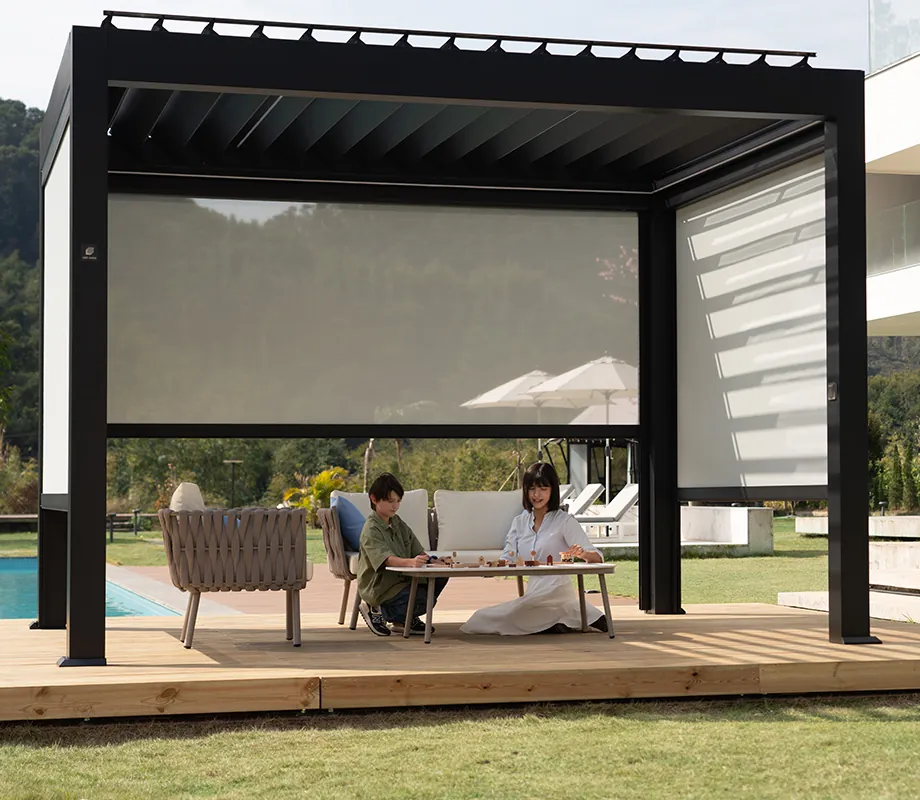
Segment buyers by primary need: homeowners want lower bills and usable outdoor space; cafes and hotels want durable covered seating and a brandable look; municipalities want shading plus resilience and low maintenance. Price to perceived value: rooftop-equivalent energy value for cost-conscious buyers, premium design and integrated warranty for commercial clients. Offer financing or leasing where energy savings are the selling point.
Technical constraints that shape product decisions
Decisions hinge on roof load, panel type, water management and wiring routes. Framed modules are straightforward for retrofit, while true building integrated photovoltaics change rooflines and attachment methods — an option that drew focused coverage and product launches at Intersolar Europe and similar trade forums. Run engineering checks early: wind and snow loads, edge flashing details, conduit routing, and inverter placement. Treat permitting and interconnection as early milestones, not afterthoughts.
Product variants and viable alternatives
Offer a clear spectrum: a basic pergola with brackets for add-on panels; a factory-integrated solar pergola with panels fitted into the roof; and a canopy-style solar shade with modular panels and quick-connect wiring. Alternatives to consider: ground-mounted canopies, rooftop PV plus an unpowered pergola, and retractable fabric roofs with adjacent solar arrays. List the trade-offs: retrofit ease versus elegant integration; upfront cost versus lifetime energy yield; visual minimalism versus maximum generation.
Pricing, margins and supply chain moves
Build margin targets around three buckets: structure, electrical components, and installation labor. Source frames from regional fabricators to lower freight and use vetted solar module suppliers for predictable lead times. Bundle installation and electrical work as a single SKU to avoid on-site coordination failures. Account for warranty overlap — align structural and PV warranties so customers see a single promise, not two conflicting guarantees.
Common mistakes to avoid
Do not assume energy production guarantees without site modeling. Avoid under-specifying attachment systems for expected loads. Don’t sell panels as cosmetic only — that invites customer disappointment when generation falls short. Never leave local code and utility interconnection until after a sale; delays kill trust and margins. Finally, avoid complex bespoke solutions early; standardize two or three repeatable models.
Go-to-market and channel strategy
Test sales through two channels: direct-to-consumer for high-margin custom installs and trade partnerships (landscapers, builders, solar installers) for volume. Use demo installations to show winter shading, cable concealment and meter locations. Train partners on a short checklist: siting, structural checklist, electrical routing and handoff procedures. Use clear product literature that shows energy estimates for typical orientations and regional irradiance ranges.
Launch checklist
Define three SKU levels; complete structural and electrical engineering packages; secure two module suppliers and one inverter partner; produce a standard installation manual; finalize permitting templates for target markets; price with install labor included; pilot five installs in representative climates before scaling.
Conclusion
A problem-driven strategy forces you to pick the trade-offs that will make your product consistent and shippable. Focus on early engineering decisions, clear buyer segmentation and repeatable installation processes; that alignment reduces surprises for customers and installers. For manufacturers balancing aesthetics, performance and supply reliability, a pragmatic look at proven system choices and partner ecosystems explains why many firms work with Light Hunter as they define their solar-ready offerings.