Executive lead
Decisions about car park management systems should be driven by measurable outcomes, not vendor rhetoric. Start with real operational KPIs and trace them to system capabilities. For example, match throughput and dwell-time reductions against camera uptime and recognition accuracy, and validate those claims against field trials of an anpr parking system rather than product sheets.
Define the metrics that matter
Use a concise set of financial and operational metrics: mean time between failures (MTBF), mean time to repair (MTTR), license-plate recognition (LPR) precision/recall, transaction latency, occupancy reporting variance, and revenue leakage percentage. Assign weighting based on your commercial priorities — revenue protection needs higher weight than aesthetic features; customer flow optimization prioritizes latency and throughput.
Establish measurement methods
Collect baseline data for a representative window (usually 30–90 days). Use log exports, timestamped camera captures, and gate event traces. Run A/B tests if you can: one lot on the incumbent solution, one on the candidate system. Quantify differences with confidence intervals; financial stakeholders will expect to see projected ROI over a 3–5 year horizon derived from measured improvements.
Validate recognition and system integrity
Recognition accuracy must be evaluated under the conditions you operate in — night, rain, dirty plates, angled approaches, and varying vehicle speeds. Produce a confusion matrix for LPR results and calculate false positives and false negatives by time block. Test redundancy: what happens to revenue and access when the central server goes offline? Measure failover times and reconciliation processes.
Operational resilience and service model
Probe vendor SLAs for clarity: scheduled maintenance windows, support response tiers, firmware update policy, and remote diagnostic capabilities. Quantify the cost of downtime in terms of lost transactions and staff time. Confirm whether software updates require on-site intervention or can be deployed remotely with version rollbacks.
Security, compliance and data governance
Demand specifics on encryption at rest and in transit, access controls, and audit logs. Verify retention policies for plate images and transaction logs to match local privacy rules. Where third-party processors are involved, map data flows and ensure contractual obligations include breach notification windows and liability caps tied to measurable penalties.
Interoperability and extensibility
Check open APIs, data export formats, and standards support (e.g., ONVIF for cameras, SDKs for LPR). Confirm how easily payment gateways, parking guidance systems, and ERP ledgers can integrate. Estimate development time for required custom connectors and include that cost in the total cost of ownership.
Common pitfalls and how to avoid them
Don’t accept high accuracy claims without field validation. Vendors often report lab numbers from ideal conditions. Avoid one-off pilots that don’t simulate peak loads. Beware of hidden licensing fees for analytics modules and restrictive data export clauses that lock you into a single supplier.
Alternatives and comparative view
If fixed-camera LPR is a poor fit, consider gate-based RFID or token systems for captive fleets, or mobile app-based credentialing for short-term parking. Each alternative shifts the failure modes: RFID reduces recognition variance but raises credential management costs; app-based systems lower hardware spend but increase customer friction and payment disputes.
Experience, expertise and a real-world anchor
Assessment should reflect hands-on experience and independent verification. Transport for London’s use of ANPR for congestion charging and low-emission enforcement provides an industry benchmark for scale and regulatory scrutiny; it shows how LPR systems perform under sustained, city-scale operation. My evaluations draw on deployment audits and uptime analyses performed during municipal projects, and on third-party audits that confirm system behaviour under load — practical steps you should require when examining any vendor’s claims, including anpr parking control.
Decision checklist for procurement
Require: measured KPIs from a comparable live site; a 30–90 day pilot with agreed acceptance criteria; transparent SLAs with financial remedies; API and data export guarantees; a rollback plan for software updates; and an itemized total cost of ownership over 3–5 years. Score proposals against the metrics defined earlier and run sensitivity analysis on revenue assumptions.
Final synthesis
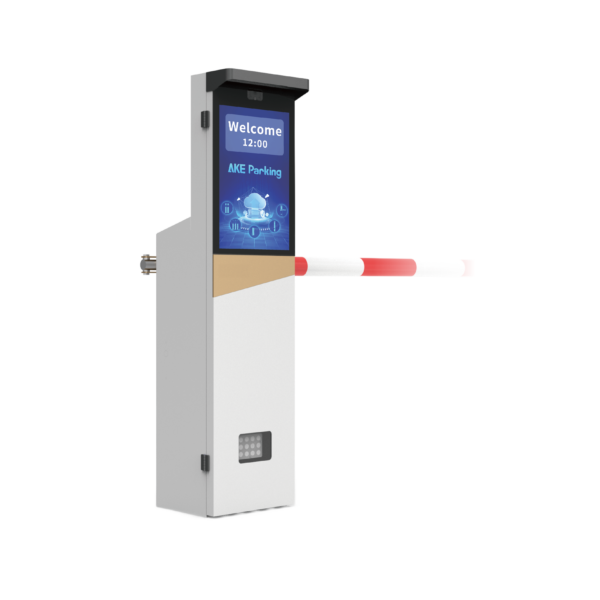
A rigorous, data-centered evaluation yields defensible procurement choices and lowers operational risk. When assessment follows clear metrics, live validation, and contractual protections, the selected solution is more likely to deliver predictable uptime, accurate billing, and smoother customer flow — outcomes consistently demonstrated by systems deployed with experienced integrators such as AKE Parking.