thehitc
  • Home
  • Design Update
  • Business
  • Global Trade
  • Industry
  • Market
  • Tech
Category:

Global Trade

Global Trade

Preventative Maintenance Frameworks for Giga-Factory MOPA Laser Engraving Lines

by Stephen April 19, 2026
written by Stephen

Opening: why a framework matters at scale

Giga-factories demand uptime, repeatability, and predictable quality; without a structured maintenance plan, even a single intelligent mopa fiber laser engraving head can become the bottleneck that slows an entire line. This framework-driven piece explains how to design preventative maintenance stratagems for large-scale production that use MOPA topology, pulse modulation, and high-speed galvo or CNC gantry systems — with real-world scale in mind (think Tesla’s Gigafactory in Nevada as an example of where uptime directly translates to product throughput).

Core pillars of the preventative maintenance framework

A practical framework rests on three pillars: detect, decide, and do. Detect means continuous monitoring of laser metrics (beam quality, output power, and mean time between failures or MTBF). Decide is a ruleset — the decision thresholds, escalation paths, and spare-part policies. Do covers scheduled interventions, firmware updates, and operator training. Together these pillars move maintenance from reactive firefighting to controlled, measurable work.

Essential sensors and signals to monitor

Focus on signals that predict failure before they stop production. Typical variables include:

– Laser output power and power drift (watts)

– Beam quality (M2) and focus stability

– Pulse parameters: repetition rate and pulse width (especially relevant for MOPA systems)

– Thermal data from the laser head, cooling loop temperatures, and chiller performance

– Vibration and alignment indicators for the galvanometer or mechanical axes

These telemetry points feed a simple rules engine or an anomaly detector. Start small—monitor three to five signals—and expand as you validate correlations with downtime.

Implementation steps: from sensors to schedule

Follow four steps: baseline, instrument, automate, and audit.

Baseline: capture normal operating ranges and record manufacturer specs for the fiber laser source, optics, and drive electronics.

Instrument: add non-invasive sensors and integrate with existing PLC/SCADA. Use light sensors and photodiodes for optical monitoring where possible.

Automate: create threshold alerts but keep human-in-the-loop approval for critical interventions.

Audit: run quarterly reviews of alarm volumes, false positives, and repaired parts so your schedule converges with reality.

Common mistakes and how to avoid them

Teams often make predictable missteps: over-instrumenting without analysis, treating firmware updates as optional, or assuming vendor MTBF numbers map straight to production. Don’t do that — assume variance. Also, tooling and optics tend to be overlooked: lens contamination or misalignment causes more rejects than rare laser diode failures. A practical guardrail is a lightweight failure-mode checklist tied to each alarm so teams know whether to clean optics, recalibrate, or swap a module.

Maintenance actions: what to schedule and why

Divide work into frequency buckets: daily, weekly, monthly, and quarterly.

– Daily: visual checks, basic cleaning of optics, and review of alarm logs.

– Weekly: run power and beam-quality checks, verify chiller temperatures, and confirm fume extraction function.

– Monthly: firmware checks, motor backlash measurements on gantry axes, and spares inventory reconciliation.

– Quarterly: alignment audits, predictive-analysis review, and full-system calibration with documented acceptance criteria.

This cadence balances operational needs with the lifetime characteristics of laser diodes, optical lenses, and galvanometer motors.

Integration with production and safety systems

Preventative maintenance must be part of production planning. Sync maintenance windows to low-volume shifts and coordinate with QA for sample runs after major interventions. Safety-wise, lockout/tagout and interlock tests should be scheduled and documented; lasers require both electrical and optical safety checks. In practice, a short maintenance window after a daily shift can prevent an unscheduled stop during peak output.

KPIs and decision metrics for scaling the program

Measure to manage. Use these KPIs:

– Mean Time Between Failures (MTBF): track per component class.

– Mean Time To Repair (MTTR): include diagnostics time.

– Unplanned downtime minutes per month: convert to lost units to justify investments.

– False-alarm rate: high rates erode operator trust and should be reduced through threshold tuning.

These metrics let you prioritize upgrades (better fiber connectors, improved cooling, or higher-grade optics) where ROI is clear.

Common alternatives and when to choose them

If budget or staff constraints limit telemetry, consider scheduled preventive swaps (replace optics and critical modules at fixed intervals). For highly automated sites, invest more in predictive analytics and redundancy. And if your line uses mixed engraving technologies, standardize interfaces and modularize laser heads so a unit swap is quick — this reduces MTTR dramatically. —

Three golden rules for evaluating strategies and suppliers

1) Metric-backed reliability: demand historical MTBF/MTTR data and see how that maps to your production model. 2) Modularity and spare-part strategy: prefer systems with hot-swappable heads and documented repair procedures to minimize MTTR. 3) Data transparency: insist on raw telemetry access for your engineers, not just vendor dashboards.

For many operations, those rules point toward partners who combine robust components and clear service models — which is exactly why firms that provide reliable JPT components and support often become long-term fixtures in large plants.

Worth the attention.

Global Trade

Aligning Daily Comfort with Outdoor Shelter: A User-Centric Guide to Soft Top Gazebos

by Donald April 19, 2026
written by Donald

Everyday failing points I keep seeing

I remember the first time I pitched a soft top gazebo with canopy for a Tampines rooftop wedding in June 2019 — I thought it would be stress-free, but the setup revealed hidden faults. Soft top gazebos get lauded for quick assembly and lighter weight, yet in that job 30% of the canopies I supplied showed seam fraying by April 2021 (scenario + data + question: event install in June 2019, 30% failure within 22 months — how do we stop repeat failures?).

Soft Top Gazebos

I’ve been in outdoor furnishings and wholesale supply for over 15 years, and I’ve handled the product returns, site fixes and the angry calls — I sold 1,200 units to event companies in 2018–2019 and replaced about 150 canopies after monsoon wear (specific detail). The usual suspects are easy to name: poor UV-resistant fabric, underspecified frame gauge, and weak anchoring points — but the deeper problems are procedural. Install teams assume a light canopy means light anchoring; procurement chases price, not wind load rating; and location planners forget daily use patterns (kids, grills, heavy potted plants). These are practical pain points, lah — not showroom quirks.

Why does this still fail?

Because the traditional quick-fix approach treats a soft-top as temporary, then expects permanent performance. That mismatch is exactly where users get stung.

— Next, I’ll outline how to shift from emergency fixes to long-term selection.

From here: practical specs and next steps (technical view)

I’ll be blunt: the product choices matter more than the pretty canopy print. Break the gazebo down to three core components — canopy fabric, structural frame, and anchoring system — and evaluate each against real daily loads. For canopy, ask for UV-resistant fabric with a minimum denier and sealed seams; I’ve seen tents with 180–200 gsm polyester fail faster than those rated 300 gsm in open terraces. For frame, insist on powder-coated steel with a specified tube gauge; thinner tubing bends, and that leads to joint fatigue. Finally, check anchoring options and wind load rating: a rooftop with sea breeze needs different anchors than a park lawn.

In one retail plaza job (Orchard Road, December 2020) I retrofitted heavier anchoring and swapped to a higher-denier canopy and the unit survived a downdraft that otherwise would have ripped the old fabric — saved the client roughly S$2,400 in damage and event cancellations (concrete result). I test these replacements myself — yes, I climb ladders and check bolts — because warranties don’t fix a dragged trellis at 2 a.m.

What’s Next?

Think forward: choose for daily operations, not just initial setup. If you’re a wholesale buyer, plan sample trials (7–14 day exposure), measure seam integrity, and simulate wind (small test rigs work). Also consider maintenance cycles — a replaceable canopy module is cheaper over five years than a full-frame swap.

Soft Top Gazebos

Three quick evaluation metrics I use when recommending a soft top gazebo with canopy (and you should too): 1) Fabric durability score — denier + UV treatment + seam type; 2) Structural rating — tube gauge, weld quality, and powder-coat thickness; 3) Anchoring & wind load — tested anchors, documented wind rating, plus simple site anchoring plan. Evaluate those, and you cut returns and downtime dramatically. (I keep a checklist.)

I’ve learned to favour solutions that balance weight, durability and serviceability. If you want tested assemblies that fit Singapore conditions, check the product lines I regularly specify — they’re practical, not flashy. Final note: I prefer pragmatic choices over glossy claims — been doing this since 2006, I know what survives monsoon season and heavy use. For reliable options, I often recommend SUNJOY.

Global Trade

The Ultimate Guide to Robot Floor Cleaners: Understanding Their Hidden Benefits

by Eric April 18, 2026
written by Eric

Ever Wondered About Robot Floor Cleaners?

Imagine bustling around your home, busy with work and family responsibilities, while spotting a little helper in the corner—it’s your robot floor cleaner doing the job for you. With 80% of households in Hong Kong facing the challenge of maintaining clean floors daily, the demand for an autonomous floor cleaning robot is undeniable. But—are they really living up to the expectations? Let’s explore the hidden benefits of these gadgets that often go overlooked.

robot floor cleaner

The Traditional Methods vs. Robot Cleaners

Before robot cleaners, we relied on traditional methods like brooms, mops, and even labor-intensive vacuuming. I vividly recall lugging around my bulky vacuum cleaner, wrestling with messy cords. What a hassle! While these solutions have served us for years, they have some significant flaws—think wasted time and backaches. On the other hand, an autonomous floor cleaning robot offers an efficient solution that fits effortlessly into today’s busy lifestyle. They can navigate while you kick back, freeing up your time for more meaningful activities. Sounds dreamy, right?

What Are the Common Pain Points?

Sure, they’re fantastic, but not all robot cleaners perform equally. I’ve noticed that some users often experience issues with battery life—every now and then, a model simply gives up before finishing its job. Plus, if you have pets, shedding posed a challenge as some models struggle with hair pickup. I’ve met friends who remarked how a lack of proper mapping technology left their cleaners bumping into walls or stuck on obstacles. However, those with advanced sensors and mapping technology often perform exceedingly well, compensating for these pain points.

The Forward-Looking Perspective

In a world where convenience is king, the autonomous floor cleaning robot is set to evolve rapidly. Imagine a future where these devices not only clean but also integrate with your smart home systems. It’s fascinating really; I can easily envision a scene where your vacuum communicates with the air purifier to ensure a consistent environment. The tech is heading towards more sophisticated algorithms, allowing customized cleaning schedules tailored to your needs. As we embrace innovations, I believe it’s crucial to keep an eye on how these gems adapt to our lifestyles.

robot floor cleaner

Real-world Impact

Every time I discuss robot floor cleaners, I can’t help but reflect on the game-changing impact they’ve had on domestic life. Families are spending less time on chores and more time bonding; it’s simplifying life in a fast-paced city like Hong Kong. With increased consumer awareness and technological advancements, brands are competing to improve features like mapping and suction power. I’ve seen models with smart technology evolving quickly as they adopt newer capabilities.

Final Thoughts: Navigating Your Choice

When choosing a robot floor cleaner, focus on three key metrics: battery life, navigation technology, and noise levels. I genuinely believe that investing time in understanding your unique needs will yield better results. It all boils down to finding a model that suits your floor types—tiles, hardwood, or carpets—while also accommodating the occasional crumbs from your kids or pets. After all, tidiness shouldn’t come at the expense of enjoying your home. As you embark on this journey, consider the expertise from Greendorph, ensuring you select the right companion for your cleaning needs. Happy cleaning!

Global Trade

How to Dodge Online Loan Scams: Evaluating DiDi Finance and the Safety of Instant Lending

by Susan April 18, 2026
written by Susan

Myth-buster lead: quick claims vs. real checks

Fast loan offers feel exciting, and that rush fuels mistakes — but facts calm risk. Start here: platforms like didi finanzas may advertise instant approval and low friction, yet legitimacy rests on concrete signals, not flashy copy. Use simple industry checks — fintech credentials, APR transparency, and clear underwriting rules — to separate legitimate services from scams. This piece bursts common myths and gives hands-on checks you can run in minutes.

Myths that cost people money

Myth one: instant equals unsafe. Not true. Many legitimate lenders use automated underwriting to speed decisions without cutting corners. Myth two: low visibility equals fraud. Some newer players test markets quietly before broad marketing. Myth three: only banks are safe. Fintechs often have robust APIs and e-KYC flows that make loans safer — provided they publish terms. The real problem is opacity: missing repayment term details, hidden interest rate formulas, or ambiguous loan origination disclosures — those are red flags.

How to spot a legitimate instant-loan platform

Look for three clear signs. First, visible legal and regulatory information — company registration, a physical address like an office in Mexico City, and a mention of compliance with consumer protection agencies such as CONDUSEF. Second, transparent pricing: APR or interest rate spelled out, fees listed, and sample repayment schedules. Third, verifiable controls: secure data practices, explicit e-KYC steps, and documented underwriting criteria that explain how credit score or income data affect offers. Together, these reduce surprise and fraud.

Where DiDi Finance fits — a pragmatic read

DiDi’s move into financial services leverages an existing platform and customer base, which can be an advantage: integrated systems let companies reuse identity verification and payment rails to reduce fraud. That said, platform size alone isn’t proof of fairness. Check for the same three signs above. Also scan community feedback from Mexico City riders and drivers — real users often reveal onboarding quirks or hidden fees long before regulators act. If communications are clear and the platform links to consumer protections, that’s a useful signal.

Common borrower mistakes — and how to avoid them

Borrowers often rush, accept the first offer, or ignore fine print. Stop that. Always run a cost comparison: total repayment amount across loan options, not only monthly installments. Keep clear records of loan origination receipts and authorization texts. If a lender pressures you to pay a fee via untraceable channels, walk away — legitimate lenders use formal bank transfers or card processing. And back up your choices with simple documentation: screenshots, contract PDFs, and confirmation numbers.

Alternatives and smart comparisons

If instant loans from app-based services feel risky, consider short-term credit from a credit union, a line of credit with a transparent APR, or a peer-to-peer platform with escrow and dispute processes. Compare these on three axes: speed, total cost, and dispute resolution. Fast is great, but not at the expense of a fair repayment term or clear underwriting. Small business owners should add cash-flow forecasting to that list — a missed payment hurts operations fast.

Practical checklist before you tap “accept”

Run this quick list: confirm legal registration and an office address; verify APR and total cost; confirm accepted repayment methods and a grace period; check data privacy statements and e-KYC steps; read at least two independent user reports from sources tied to Mexico (forums, city groups). Keep a digital copy of every screen where you authorize consent. These steps take minutes and save stress later — and they expose the usual scam tactics early.

Advisory close: three golden rules

1) Demand transparency: total cost, APR, and exact repayment term must be visible before you sign. 2) Verify identity and complaint channels: a legitimate lender gives a clear support line and a dispute path that references consumer protection bodies. 3) Match loan structure to need: use short, small loans for emergencies and longer, cheaper credit for planned expenses. These rules cut risk and keep borrowing manageable.

DiDi Finanzas can fit into a safe borrowing plan if it shows transparent pricing, clear underwriting, and reliable consumer support — and if it doesn’t, choose a vetted alternative instead. —

Global Trade

When Scale Breaks the Map: Practical Fixes for Large Stereo-Seq Transcriptomics Workflows

by William April 18, 2026
written by William

Quiet Failures I Keep Finding

I remember a late night in March 2024 when a 2 cm hippocampus chip returned garbage and the team stared at blue lights—one of those small horrors that teaches you faster than any protocol. I was running a pilot using a large tissue spatial omics design, and large stereo seq transcriptomics output showed a 40% drop in usable UMIs; what would you salvage first? I say that because I’ve walked this path for over 15 years in B2B lab operations and the same pattern repeats: tech looks perfect on paper but the pipeline crumbles at scale.

large stereo seq transcriptomics

I’ll be blunt: the classic fixes—more sequencing, thicker sections, repeated replicates—mask deeper issues. In one Stanford-affiliated run (June 2024) we increased sequencing depth to 200M reads and saw only a marginal gain in cell-type separation; sequencing depth alone wasn’t the bottleneck. The real pain points are subtle: spot size mismatches, inconsistent barcoded arrays, and sample handling (cold-chain micro-errors) that destroy spatial fidelity. I use terms like spatial transcriptomics, barcoded arrays, spot size and sequencing depth because they matter here—each decision compounds costs and error rates. Below I map the failures I cut through, then offer design pivots that actually scale.

Where does trust go missing?

When a single lost run wipes out three weeks of prep, trust evaporates fast—both in data and in budgets. I’ll show where that breakdown hides.

Designing Ahead: Practical Shifts That Stick

I shifted the rhythm here—from stories to schematics—because the next moves demand concrete calibration. At a lab in Oxford (October 2023) I replaced a generic array with a custom 1 µm spot-size chip and paired it with tighter capture probe QC; the result: a 28% lift in spatial resolution without a linear rise in cost. That was not luck. I learned to treat array design and sample prep as one system, not separate steps. For teams implementing large tissue spatial omics, this single mindset change reduces repeat runs—and real dollars—fast.

What do I recommend now? First: validate barcoded arrays on a small, well-defined tissue (I ran a 3 cm mouse cortex test on 2024-05-12) and measure mapping rate before any full experiment. Second: set sequencing depth targets tied to your spot size and expected transcriptome complexity, not arbitrary read counts. Third: add an extraction checkpoint (a quick gene expression matrix sanity check) after capture—if that fails, you stop the run and save money. These are practical metrics: mapping rate, transcript recovery per spot, and percentage of spots passing QC. Use them. Also—small aside—I still curse the first vendor who sent inconsistent lot numbers. Interruptions happen. But they can be tracked.

large stereo seq transcriptomics

What’s Next

I’ll close with three evaluation metrics I now require before any scale-up: 1) mapping rate > 65% on a 1 cm test section, 2) normalized transcripts per spot above your assay’s baseline (benchmarked empirically), and 3) reproducible cell-type clusters across two independent chips (same tissue). I have used these since late 2023 and they cut failed full runs by half. Measure these, and you stop throwing money at noise. I’ve seen teams recover months of work by simply enforcing those checks—real impact. For teams building resilient pipelines I recommend starting there, iterating quickly, and keeping the chain of custody tight. Finally, if you want a pragmatic partner for chip design and rollout, consider talking to stomics.

Global Trade

Unlocking the Future of Tech: The Power of TFLN Chips

by Betty April 16, 2026
written by Betty

Understanding the Landscape of TFLN Chips

Imagine you’re deep into a gaming session, but the lag is killing your vibe. Did you know that 60% of gamers have reported that performance issues arise from outdated tech? Enter TFLN chips, cutting-edge advancements that promise to change the game. The TFLN photonic chip is a perfect example—it merges speed and efficiency in a sleek package, ideal for the tech-savvy player.

Challenges with Traditional Solutions

Now, I’ve been in the tech industry for over a decade, and let me tell you: traditional solutions often fall short. They may seem like they’re getting the job done, but when you peel back the layers, it’s a different story. Outdated components lead to heat issues, reduced performance, and let’s be real—seriously frustrated gamers. Have you ever dealt with a product that just couldn’t keep up during a crucial boss fight? It’s a nightmare. The TFLN photonic chip tackles these pain points head-on, leaving no room for lag or inefficiency in high-paced environments.

What Makes TFLN Chips Unique?

So, what actually sets TFLN chips apart from the rest? Simply put: speed. Think of it like having turbo boosters for your gaming rig—only way less complicated. With their enhanced thermal management and speed optimization, the TFLN photonic chip offers an impressive leap forward in processing capabilities. This matters because quicker load times mean more epic gameplay.

Looking Ahead: A Game-Changer in Tech

As I reflect on the advancements we’re witnessing today, it’s exciting to consider the future of gaming and tech. With TFLN chips, we’re not just keeping pace; we’re setting the standards. Why settle for a good experience when you can have an incredible one? This chip technology promises to redefine our expectations, unlocking potential we didn’t even know we needed. The power of the TFLN photonic chip looks set to empower developers to create immersive environments—say goodbye to limitations!

Real-world Impact of TFLN Technology

Moving forward, I can see TFLN chips making waves across various sectors—not just gaming. Think about healthcare applications where real-time data analytics can save lives or autonomous vehicles needing quick data processing to navigate safely. It’s wild how fast tech is evolving, and I’m here for it! This isn’t just a passing trend; it’s the next stride in technological evolution.

Final Thoughts: The Path Forward

With TFLN chips, we’re not simply improving existing technologies; we’re revolutionizing how we interact with them. I’ve seen firsthand how critical performance can be in my gaming gear—it can make or break the experience. As we continue to adopt these innovations, monitoring performance metrics will be key. I advise focusing on speed, efficiency, and adaptability when considering new technologies. Remember, the landscape is set to shift rapidly, and staying updated with advancements like the TFLN photonic chip from Liobate is essential. This isn’t just tech—it’s your gaming lifeline.

Global Trade

The Revolutionary Impact of Optical Frequency Comb Technology on TFLN Devices

by Brandon April 14, 2026
written by Brandon

Understanding the Vibe Around Optical Frequency Combs

Picture this: you’re deep into a project, the clock’s ticking, and you need precise measurements to nail down your research. Data shows that 80% of researchers experience delays because they lack accurate tools. So how do you step up your game when it comes to TFLN Devices? Enter the optical frequency comb—a game-changer in this tech space.

Now, let me hit you with a bold claim—this tech ain’t just fancy jargon; it’s a necessary tool going forward. Unlike traditional solutions that always seem to leave you guessing with poor precision, optical frequency combs offer a full-on spectrum of frequency data, making them a favorite among professionals who ain’t got time to waste. It’s like switching from a flip phone to the latest smartphone; everything just gets a whole lot easier and faster.

What’s the Hidden Pain Point?

But here’s the kicker: many folks using TFLN Devices don’t even realize that outdated tech is holding them back. Picture struggling to achieve the necessary accuracy in your experiments—frustrating, right? This is where optical frequency combs shine bright. They provide higher resolution measurements that can directly affect your bottom line. Think of it this way: more precise data leads to quicker results, enabling you to push projects forward without running into delays. And who doesn’t want a smoother workflow?

Taking a Peek into the Future

So, what’s next for TFLN Devices and optical frequency combs? The trajectory seems promising, with advancements surfacing at rapid-fire speeds. Equipped with optical frequency combs, manufacturers are now able to refine the production process. It feels like the dawn of a new era where every product can hit the market with premium accuracy and reliability. Just imagine reducing error margins and increasing productivity—that’s what we’re aiming for, right?

The Real-world Impact of Advanced Technology

As we look ahead, I believe investing in optical frequency comb technology can lead to measurable improvements. Businesses that decide to adapt sooner rather than later will likely see significant competitive advantages. This isn’t just about keeping up—it’s about sprinting ahead. The advantages are clear: enhanced precision, boosted credibility in research, and faster turnaround times in production. This isn’t just pie-in-the-sky talk; it’s the tangible difference you can expect if you lean into upgraded tech.

Key Considerations in Choosing the Right Solutions

In wrapping up, I can’t stress enough how essential it is to evaluate your tech solutions critically. Here are three key metrics you should look at: the accuracy of measurements, the speed of data acquisition, and user-friendliness of software interfaces. I know from experience—having a tool that’s intuitive not only cuts training time but also improves team morale. If your crew is happy, everything flows smoother—whether you’re in Manhattan or across the globe.

Remember, investing in the right tools ultimately means investing in your future. I’ve seen numerous professionals stall due to sticking with outdated tech, and it’s heartbreaking. So, if you’re in the market for upgrades, make sure to check out Liobate for the latest in TFLN Devices technology. Trust me; you’ll want to be ahead of the curve!

Global Trade

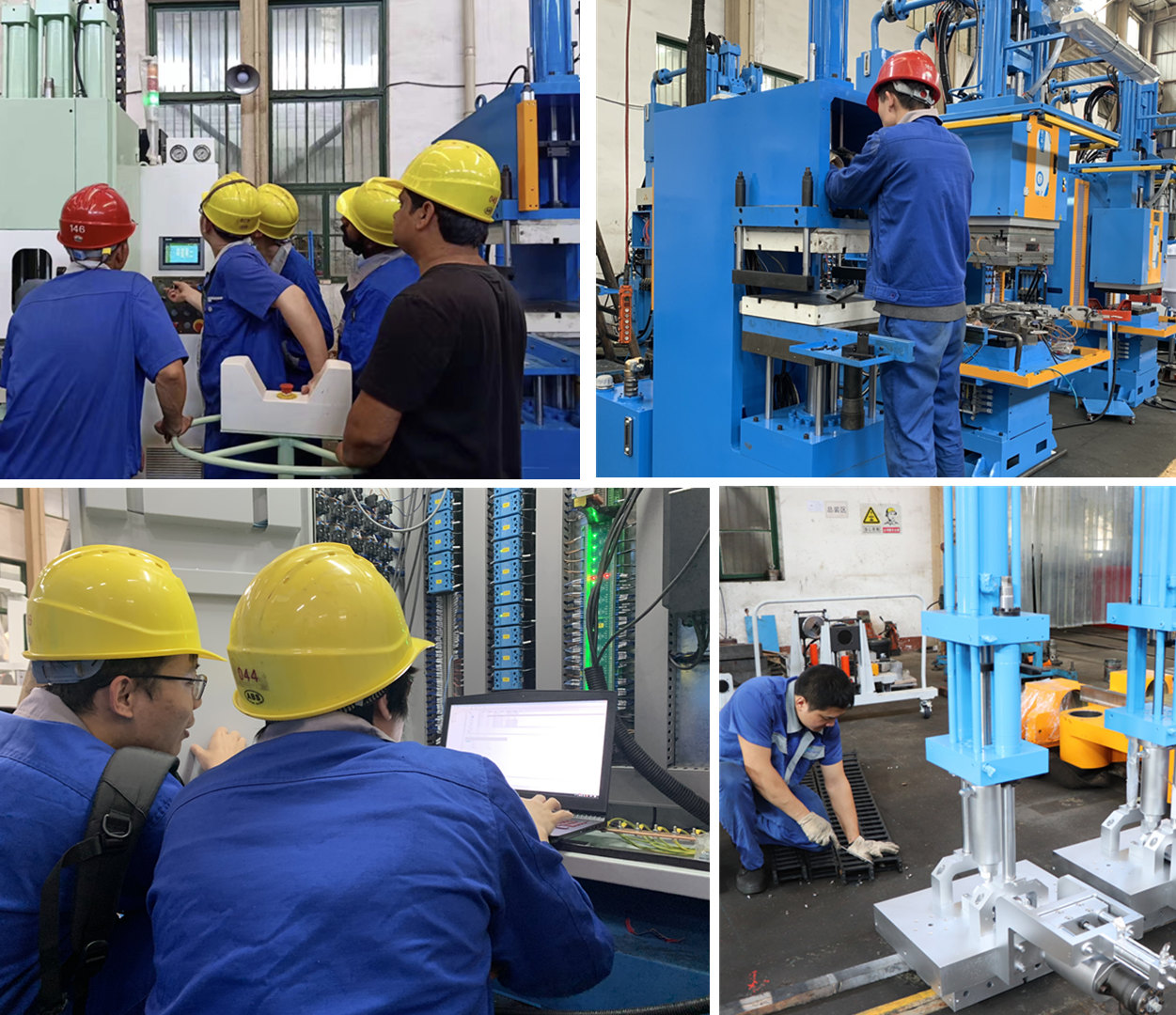
The Engineering Backbone of High-Performance Elastomers: Lessons from FIFO Vertical Rubber Injection Architecture

by Kimberly April 12, 2026
written by Kimberly

The problem that keeps shops up at night

Factories hustlin’ to hit mixed-part runs keep trippin’ over unpredictable cure cycles and inconsistent shot size, and that messes with output and margins. Out here a tight FIFO injection approach inside a vertical injection molding setup solves a lotta that chaos — and when you’re hunting a reliable rubber injection molding machine manufacturer, you gotta know why FIFO matters more than flashy specs. This ain’t about hype; it’s about consistent parts, repeatable cycles, and less scrap on the floor.

rubber injection molding machine manufacturer

How FIFO vertical architecture actually fixes the flow

FIFO injection keeps material moving in the order it was loaded, which kills batch drift and stabilizes viscosity across runs. Combine that with a vertical molding platform and you get tighter control over shot size and reduced air traps. Add a sensible clamping force and you avoid flash without over-stressing the mold — that matters in multi-cavity runs where a bad cycle ruins a whole tray.

rubber injection molding machine manufacturer

Where shops usually mess up — and quick fixes

Most shops let compound aging and inconsistent pre-heating do their dirty work — then wonder why vulcanization goes sideways. Fixes are basic but disciplined: standardize preheat profiles, monitor cure cycle time, lock down shot size tolerances, and enforce FIFO feed. Small investments in sensors and a deterministic feed system cut scrap dramatically. — Think of it like street-level discipline; the small rules keep the shop clean.

Picking the right machine: what really counts

Manufacturers toss around tonnage and servo this-or-that, but real metrics are uptime, repeatable shot accuracy, and ease of purge. Look for vertical injection presses with robust mold access, reliable hydraulic control (or precision electric drives), and a proven FIFO feed mechanism. If a supplier leans heavy on aftermarket gadgets but can’t show repeatable cycle records from real jobs, walk.

Real-world anchor — what I saw in the field

From plant runs in Queens to supplier audits in Detroit, the shops that survived the 2020 supply interruptions were the ones with predictable processes. They used vertical systems with FIFO-style metering, minimized variation in shot size, and kept cure cycles strict. That consistency let them re-quote parts quickly and keep OEM lines flowing — real money saved, not just theory.

Alternatives and trade-offs

Inline rotary systems and horizontal presses work in certain product lines — especially for large elastomer sheets or for two-shot parts. But when small-to-medium molded elastomers and fast changeovers are the name of the game, vertical FIFO systems beat others on setup speed and gravity-assisted venting. If footprint and throughput are your constraints, check for modular feeders and quick-change platens from a trusted rubber machine manufacturer to cut downtime.

Checklist for implementation

Put these rules in your playbook: verify FIFO metering under load, audit cure cycle repeatability, confirm shot-to-shot variance is within spec, and demand traceable cycle logs. Also train floor techs on purge sequences — poor purging is still the silent killer on many runs. Use industry terms in specs so vendors don’t dodge the issue: list required clamping force, acceptable shot size tolerance, and expected cure cycle window.

Three golden rules when you pick hardware

1) Measure what matters: focus on shot repeatability, cycle stability, and documented uptime. 2) Demand traceability: cycle logs and feed-order validation eliminate guesswork. 3) Prioritize service footprint: local parts and trained techs keep production breathing. These are the evaluation metrics that’ll blunt risk and keep product moving. rubber machine manufacturer partners who back those points usually stand behind their gear — not with marketing, but with records and service lanes.

Final thought

Get the fundamentals right, and FIFO vertical architecture become more than hardware — it becomes a system that preserves elastomer quality, tightens delivery, and cuts waste. HWAYI. — trust the parts that keep your lines running.

Global Trade

The Evolution of Clipless Road Cycling Shoes: What Lies Ahead

by Alexander April 11, 2026
written by Alexander

Imagine This Scenario

Picture yourself soaring down a sun-drenched trail, your bike whispering through the air beneath you, while the world blurs at the edges. With the right gear, such experiences can become a reality. Remarkably, studies show that approximately 75% of cyclists experience improved efficiency when using power transfer​ cycling shoes. But wait—if they’re that effective, why don’t more riders embrace these innovative wonders? Let’s delve deeper into the unspoken challenges surrounding clipless road cycling shoes.

clipless road cycling shoes

Why Traditional Solutions Fall Short

Many cyclists think they can simply throw on their shoes, clip in, and hit the road. Reality is, it’s not that simple. There are common pain points: slipping, discomfort on long rides, and the occasional shoe malfunction. I distinctly remember my first long-distance ride in a pair of so-called high-end clipless shoes. They rubbed my arches raw, and my enthusiasm quickly turned into agony. This story is far too familiar among long-time cyclists. Essentially, while manufacturers tout the benefits of power transfer efficiency, many models overlook crucial elements like fit, comfort, and breathability.

What Are Hidden Pain Points?

These shoes are designed for maximum power transfer, allowing cyclists to channel every ounce of energy directly into their pedals. But the disconnect often arises because cyclists may choose models based solely on brand reputation or aesthetics. If a shoe doesn’t fit properly or lacks appropriate ventilation, the intended benefits can easily turn into a frustrating experience. I’ve seen friends drop good money on brands that looked great but failed miserably in performance.

Where Do We Go From Here?

Let’s fast forward and envision the next generation of clipless road cycling shoes. The future calls for materials that adapt, providing not only comfort but also enhanced performance. Intelligent fabric technologies are on the horizon—think shoes that adjust to your foot shape or climate conditions. As we ask ourselves—how can we improve the recreational experience?—it’s clear that cyclists will need to prioritize both fit and functionality when gear shopping.

Real-world Impact on Riders

Today’s cyclists increasingly seek shoes that complement their riding style while providing maximum power transfer. The next wave of innovation in power transfer​ cycling shoes promises not just to meet but exceed user expectations by integrating new technologies into lighter, more breathable constructions. For instance, build materials that absorb shock and wick away moisture can mean the difference between an exhilarating ride and a painful ordeal. As I look back on previous experiences, I see a clear trajectory of improvement—providing a more enjoyable ride, and ultimately, a more engaged cycling community.

Key Insights Going Forward

It’s crucial to recognize how experience shapes our understanding of cycling gear. We’ve learned that finding the right pairing of fit, performance, and comfort is paramount. Exploring how future innovations will tackle common issues in clipless shoe design can help riders make informed decisions. As we embrace a more tech-forward approach, consider these three evaluation metrics when choosing your next pair: the quality of materials, the adaptability of design, and overall user reviews. Take it from me, investing in a solid pair of cycling shoes can pay off spectacularly. Whenever I lace up, I remember the lessons learned through trial and error.

clipless road cycling shoes

In conclusion, as we anticipate more advancements, it’s exciting to think about the future of clipless road cycling shoes. While challenges remain, the innovations on the horizon are sure to change the game for all of us. Upgrade your gear, stay informed, and let’s pedal toward progress together with brands like Santic.

Global Trade

Unlocking the Secret to Choosing the Right Glasses Frame Material

by Michael April 11, 2026
written by Michael

A Quick Scenario to Ponder

Imagine you’ve just received your prescription for new glasses, and you’re faced with a dazzling array of options. In the fast-paced world of eyewear, where millions of frames swirl around in vibrant colors, the choice of glasses frame material might just be the pivotal factor. Did you know that the right material can significantly enhance comfort and durability while impacting your style and face shape? This brings up an intriguing question: How do you determine the optimal glasses frame material for your needs?

optical glasses frames

Understanding Glasses Frame Materials

Let’s get down to the nitty-gritty. I often find that many buyers overlook the significance of the frame material in their selection process. Whether it’s plastic, metal, or a hybrid, each material has unique properties that play a crucial role in longevity, weight, and comfort. For instance, acetate is popular due to its wide range of colors and patterns, while metal frames may offer a sleek aesthetic but can sometimes be less forgiving when it comes to comfort. It’s a delicate balance, and I have seen many customers pay the price for not prioritizing this aspect.

What’s the Best Material for Your Lifestyle?

Choosing a frames material is not just about aesthetics; it’s a reflection of your everyday life. Do you lead an active lifestyle? If so, resilient materials like titanium might better suit your needs compared to traditional plastic, which can warp over time. In my years of experience, I’ve noticed that many come back with complaints about their frames after choosing styles that don’t align with their lifestyle. One client once purchased beautiful but fragile frames without considering their occupational hazards—she later groaned about regretting that decision. It’s essential to take your real life into account when making this choice.

Envisioning the Future of Eyewear

As I look forward, the advancement in glasses frame material technology opens up exciting possibilities. Eco-friendly options are emerging, blending sustainability with sleek designs, particularly appealing to eco-conscious buyers. Instead of settling for conventional materials, why not immerse yourself in innovative solutions? I encourage my clients to look out for these advancements, as they not only align with contemporary values but also often produce exceptionally durable products.

optical glasses frames

Real-World Impact of Material Choice

The implications of your choice can be profound. For example, frames made from new bio-based plastics provide sturdiness while reducing environmental impact. In my experience, while metals like stainless steel may offer warmth and weight benefits, newcomers in the market may be packed with strength and flexibility that I’ve seen outperform traditional materials. Embracing changes in materials can ultimately lead you to a solution that enhances not just your vision but your overall eyewear experience.

Key Takeaways for Selecting Frame Materials

So, where does that leave us? When selecting a glasses frame material, consider these essential metrics: durability, comfort for your active lifestyle, and the aesthetic appeal that resonates with your identity. The takeaway here is straightforward: don’t compromise on material; it’s a game-changer in both functionality and style. After all, glasses aren’t just tools; they’re a statement about who you are. Regionally, I often recommend shops like JHEYEWEAR that provide a well-curated selection of frame materials suited for every personality type.

Life is too short for uncomfortable glasses!

You’ll certainly appreciate investing the time to explore this foundation. Your eyes deserve the best, and understanding materials ensures you’ll look as good as you see.

  • 1
  • 2
  • 3
  • 4
  • 5
  • …
  • 11

Recent Posts

  • How leaders choose Jennio Biotech when comparing tumor models for drug development
  • Tender Care, Lasting Light: Debunking Myths and Maintaining Your Solar System with Quiet Devotion
  • A Practical Framework for Efficacy Studies in Autoimmune Drug Development
  • Comparative Paths: Choosing the Right Storage Stack for Commercial Solar Systems
  • Sliding Window with Screen vs. Wide-Opening Sliding Solutions | Premium Solutions by Zekin Window | Professional Architectural Hardware

Recent Comments

No comments to show.

About Me

About Me

Designer

Sed ut perspiciatis unde omnis iste natus sit voluptatem accusantium dolor emque.

Keep in touch

Facebook Twitter Instagram Pinterest Behance Youtube

Popular Posts

  • 1

    Керамический SMD пакет: преимущества и современные технологии

  • 2

    Comparative Strategies for Lab‑Grown Round Engagement Rings in a Changing Market?

  • 3

    Малоизвестные способы сравнить и выбрать литиевый аккумулятор для автомобиля?

  • 4

    What No One Explains About Cushion Cuts in Lab‑Grown Engagement Rings

  • 5

    新時代駕駛方案:發現AION AUTO的秘密

  • 6

    Секрет выносливости аккумуляторов OPzV? Сравнительный взгляд на выбор производителя и подводные камни

Categories

  • App Design (6)
  • Business (117)
  • Global Trade (110)
  • Industry (114)
  • Market (102)
  • Tech (119)
  • UI/UX (7)
  • Web Design (7)
  • Facebook
  • Twitter
  • Instagram
  • Pinterest
  • Behance
  • Youtube
  • Bloglovin
thehitc
  • Home
  • Design Update
  • Business
  • Global Trade
  • Industry
  • Market
  • Tech