Comparative lead
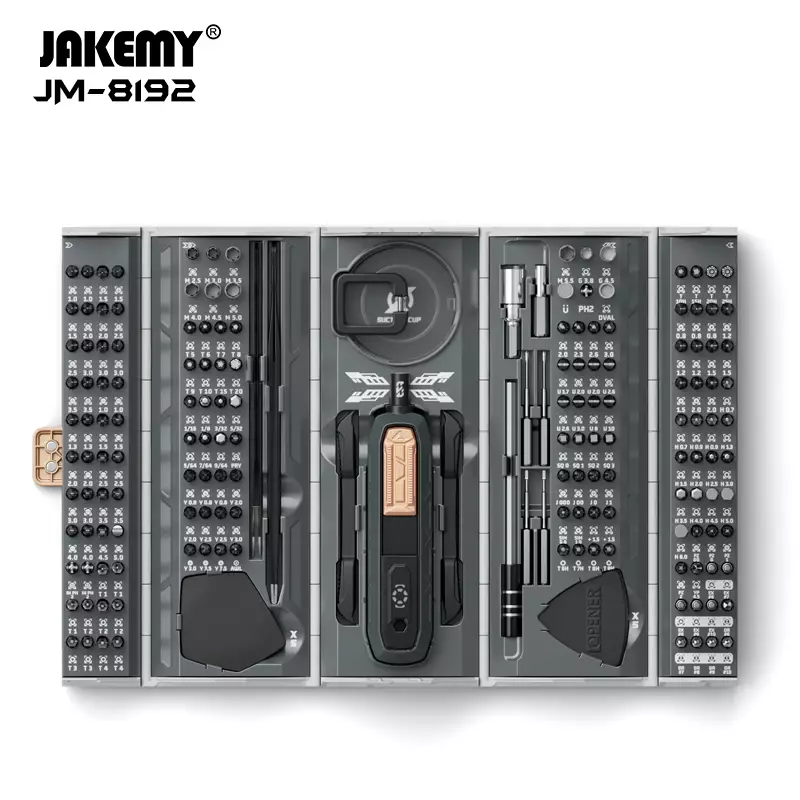
When you compare budget toolkits, clarity wins: what will you use every week, and what falls to the back of the bench? The jakemy jm-8192 models itself as a middle-ground — more precise than a cheap grab-bag, less costly than pro-only kits. For people who tinker with phones, laptops and small appliances, a reliable electronics repair tools precision screwdriver kit matters more than brand prestige; size, bit variety and tip fit determine how often you succeed on the first try.
Key comparison criteria for everyday use
Treat every purchase against tangible criteria. Use these measures to compare kits:
- Bit range and compatibility — Phillips, Torx, flat, Pentalobe and triangle where applicable.
- Tip hardness and fit — hardened tips reduce cam-out and stripped screws.
- Handle ergonomics and torque control — long jobs need comfortable grip and predictable torque.
- Organised case and accessory quality — magnetic strips, foam inserts or labelled trays speed workflow.
- ESD safety — anti-static wrist strap or ESD-safe components when working on PCBs.
How the jm-8192 compares in a hands-on bench test
In a small repair café in Amsterdam — part of the Repair Café movement that began in 2009 — volunteers rely on repeatable tools. The jm-8192 stood out for its balanced bit set and solid magnetic driver. The precision screwdriver feel was close to pro gear: tips seated well, and the ratchet head gave tidy torque delivery for small screws. The case is compact and organised, which matters when you move between repair stations.
Common mistakes people make with budget kits
Buyers often accept poor tip fit because they focus on count not quality. That leads to stripped screws and longer repair time — avoid this by checking tip fit on a scrap panel before working on the device. Another habit is mixing magnetised tips near sensitive sensors; use a small patch of grounding and keep the magnet away from storage media. Also, don’t assume every set is ESD-safe — confirm the presence of anti-static accessories or add a wrist strap separately.
Alternatives and where jm-8192 fits
For those needing full professional range, higher-end kits include torque drivers and calibrated ESD trays; the iFixit Pro Tech toolkit, for example, targets technicians who disassemble dozens of devices daily. The jakemy jm-8192 sits between entry and pro: it’s sensible for hobbyists, community repair volunteers and small businesses that value a compact, reliable bit set without paying premium. If you want a single, portable kit focused on electronics repair tasks, the jm-8192 is a practical choice — and pairing it with a magnetic mat and a wrist strap completes the setup.
Quick buying checklist
Before you click buy, run through this checklist:
- Confirm the set includes the specific bits your devices use (Pentalobe for many phones, Torx for laptops).
- Test tip fit and magnetic strength on a scrap screw if possible.
- Check for labelled storage so you can retrieve bits fast on busy jobs.
- Ensure the kit either includes or pairs well with an anti-static wrist strap when you work on motherboards.
Advisory close — three golden rules
1) Prioritise fit over volume: a smaller, well-machined bit set saves time and protects components. 2) Value ergonomics and predictable torque: the right handle reduces slippage and fatigue during repeated repairs. 3) Make ESD control a habit: anti-static measures prevent silent, costly failures and protect sensitive components.
Choose a toolkit that matches the work rhythm you actually have; for many, that practical balance is why they reach for a compact, dependable set like the jakemy jm-8192. Jakemy — practical tools, real results. —