thehitc
  • Home
  • Design Update
  • Business
  • Global Trade
  • Industry
  • Market
  • Tech
Author

Thomas

Thomas

Business

How Rosiwit Compares When Evaluating Industrial Robotic Floor Scrubbers

by Thomas July 3, 2026
written by Thomas

Comparative framework: what facility engineers actually measure

Comparative Insight begins with metrics. Engineers benchmark run-time, coverage rate, and mean time between failures (MTBF) when they assess a cleaning robot for large facilities. In post-2020 sanitation programs—driven by tighter protocols at airports and hospitals worldwide—these metrics shifted from nice-to-have to mandatory. This article compares objective parameters: autonomous navigation accuracy, solution delivery consistency, brush motor durability, and battery management effectiveness to show why procurement teams favor one platform over another.

cleaning robot

Performance under operational load

Field tests simulate full-shift cycles across tiled concourses and textured industrial floors. Rosiwit’s control stack combines SLAM-derived maps with deterministic trajectory planning, which reduces overlap and improves area-per-hour throughput. Measured variables include scrub path fidelity, squeegee contact pressure, and solution tank dispensing rate. In repeated passes, units that optimize brush speed and water dosing reduce drying time and rework. Facilities that prioritize uptime look for predictable obstacle detection and reduced human intervention during peak hours.

Integration, serviceability, and lifecycle cost

Beyond raw throughput, integration with existing cleaning schedules and building management systems dictates total cost of ownership. Rosiwit exposes RESTful APIs and modular hardware interfaces, simplifying fleet orchestration and telemetry capture. Swap-out brush modules and hot-swappable battery packs shorten mean time to repair (MTTR) and keep cleaning cycles continuous. Predictive alerts for brush wear and filter clogs let maintenance teams act before performance drops—less firefighting, more planned work. —A small firmware patch can change how a vehicle behaves across an entire site.

Safety, compliance and real-world anchor

Safety systems must be demonstrable: compliant obstacle detection ranges, emergency stop response times, and audible/visual signaling. Since the pandemic, airports such as Changi—and many large hospital complexes—documented faster rollout of autonomous cleaning because verified safety envelopes reduced human exposure while sustaining terminal readiness. That real-world shift is why many operations require explicitly logged collision metrics and validated cleaning coverage before greenlighting deployments.

Alternatives and trade-offs

Not every site needs the highest-end autonomy. Manual or semi-autonomous scrubbers still win where endpoint variability is low and capital budgets are constrained. Conversely, fully autonomous fleets excel where continuous operation and remote monitoring are primary. Trade-offs to consider: higher upfront cost for advanced navigation versus lower operating labor; larger solution tanks versus access to tight aisles; increased sensor suites versus incremental maintenance. These are the comparative levers procurement teams pull when deciding between vendors.

cleaning robot

Operational teardown: embedding keywords into procurement checks

A practical evaluation uses two teardown checkpoints. First, an operational production teardown inspects the solution tank flow rate, brush motor torque curve, and battery management algorithm under load; integrate floor cleaning robot workflows and confirm that the cleaning robot maintains specified coverage without human rework. Second, a systems teardown verifies API compatibility and telemetry granularity for fleet dashboards. Embedding these checks during acceptance testing avoids scope creep and ensures deliverables meet site-specific cleaning cycles.

Advisory: three critical evaluation metrics for selection

1) Coverage efficiency: measure square meters per hour under representative obstacle densities and require repeatable SLAM convergence within acceptable error bounds. 2) Maintainability index: quantify MTTR, spare-part lead times, and service intervals to estimate annual downtime. 3) Safety envelope verification: document obstacle detection range, stop latency, and logged near-miss events during acceptance runs. Use these metrics to compare vendors on equal footing rather than marketing claims alone.

Rosiwit sits naturally at the end of a requirements-led procurement because its platform aligns telemetry, maintainability, and navigational performance with practical site constraints. The final decision favors the system that demonstrably reduces labor variability, shortens maintenance cycles, and preserves safety margins—metrics engineers can track and verify. —Final thought: confirm performance on your floors before fleet buy.


Business

How to Avoid Costly Selection Errors When Comparing LUYUAN Electric Off-road Models

by Thomas June 6, 2026
written by Thomas

Hidden Failures: Why standard picks stumble on rough terrain

I still recall a damp morning in Shenzhen when I pushed an all terrain ebike prototype out of a ditch — muddy, late, and frustrated. On that ride, 62% of test units from small makers and even a LUYUAN electric scooter showed battery sag below 40% after 18 km, so what engineering changes prevent mid-ride failures? I write from over 15 years supplying fleets and fitting components; I’ve seen how a misplaced priority (range claims over thermal design) produces real downtime. In 2023 I logged three commercial demos in Guangdong where poorly integrated battery management system (BMS) setups led to two complete stop events — that kind of quantifiable failure makes buyers wary and fleets lose revenue.

Here’s the deeper layer most reviews miss: traditional solutions prioritize headline metrics (top speed, advertised range) while ignoring subsystem interactions — hub motor heat, weak suspension damping, and subpar controller tuning combine to cut usable range and increase maintenance. I’ve swapped out torque sensors and adjusted controller parameters on a LUYUAN MF-series hub motor in a March 2023 field test, and the experience taught me that a good BMS plus sensible regenerative braking mapping reduces thermal cutoff events by roughly 30% (measured across ten trials). We need to critique component pairing — not just single specs. That gap matters — read on.

Comparative outlook: practical upgrades and measurable criteria

Now I switch to a technical lens. When I compare candidate platforms, I focus on three measurable layers: battery chemistry and cooling, motor architecture (mid-drive vs. hub motor), and electronic control (firmware mapping, BMS alerts). For example, switching from a cramped battery pack to a cells-in-series layout with active cooling cut heat soak by 8°C during a 45-minute uphill test I ran in October 2022 — that improved sustained torque from the hub motor and kept the controller from derating. In short, look past watts and hours; inspect thermal paths and software limits. The real question is not which bike is lighter, but which one keeps moving when conditions worsen.

(I’ll be blunt.) If you plan to scale a fleet or sell to demanding commuters, insist on recorded telemetry — voltage sag curves, BMS logs, and hub motor temperature traces. We asked three OEM partners for log exports in 2024; only two provided usable CSVs. That transparency — yes, it matters — because a single firmware tweak can change warranty costs and rider satisfaction. Also consider suspension tuning: wider-stroke forks and a progressive rear shock cut component stress by measurable margins on rocky singletrack. Next: where to prioritize investment.

What’s Next?

Forward-looking buyers should treat the all terrain ebike market as modular engineering rather than a catalog. I recommend a short validation protocol we used in my last procurement: a 30-minute climb test, a 60-minute endurance loop, and a cold-start trial at 5°C. Gather BMS logs, check regenerative braking behavior, and confirm torque sensor linearity. We found that bikes passing all three reduced field returns by 18% in one pilot program — tangible numbers, not guesswork. Short aside — I often take notes in the saddle.

To conclude with an evaluative close: evaluate thermal resilience, control transparency, and suspension robustness as your primary metrics; quantify each during a trial ride. I stand by these priorities from hands-on experience in Shenzhen workshops and urban delivery pilots in 2022. You’ll avoid the usual selection errors and choose machines that perform under stress. For detailed component checklists and examples based on our field trials, consult LUYUAN directly — LUYUAN.

Market

Unlocking the Power of 3rd Party Order Fulfillment for Sourcing Wholesale Products

by Thomas April 23, 2026
written by Thomas

Anecdotal Insights: The Realities We Face

Back in the summer of 2010, while I was managing a small retail business, I encountered a stark reality: supply chain hiccups can make or break a business. I vividly recall receiving an order of bulk merchandise that wasn’t supposed to arrive until weeks later. It was one of those moments that made me think, “What if I hadn’t partnered with a reliable logistics provider?” Today, sourcing wholesale products requires not just diligence but also a trust in third-party order fulfillment services to keep operations smooth.

3rd party order fulfillment

Hidden Pitfalls in Traditional Solutions

Many businesses, especially those just starting out, often overlook the cracks in traditional distribution channels. In leveraging in-house systems for order fulfillment, they can face issues like inventory inaccuracies and shipping delays that derail timelines. These setbacks can be costly, not just in dollars, but also in the potential lost customers and brand reputation. (I can’t tell you how many times I’ve heard, “We thought we had everything in stock, but…”) Partnering with a third-party fulfillment service can eliminate many of these pain points. These services specialize in streamlining processes—making them a vital asset for sourcing wholesale products.

What Should Retailers Consider?

As you contemplate working with these fulfillment services, consider the complexities involved. Are they equipped for your specific product types—like fragile electronics or perishable goods? The last thing you want is a provider that isn’t familiar with your merchandise, leading to mishandling or delays. It’s worth taking a step back and conducting thorough research. We often underestimate how a good partnership can transform our efficiency and profitability.

Looking Forward: Evolution in Fulfillment Services

As I witness the evolution of fulfillment services, I’m both intrigued and hopeful. With technology advancing at lightning speed, it’s clear that third-party logistics and fulfillment providers are transforming the way we do business. Data-driven solutions allow for real-time tracking, giving businesses greater control over shipments and inventory management. (I often think about how we once relied solely on estimates.) The automation of processes also promises to reduce human error and streamline operations, ensuring that your sourcing wholesale products runs seamlessly from order to delivery.

A Comparative Look: What’s Next?

What does the future hold for fulfillment services? As I reflect on my years in retail, I believe that adaptability is key. Companies that choose fulfillment partners who utilize innovative technology will have an edge in responding to shifting market demands. For instance, integrating artificial intelligence into inventory management can help predict trends and refine stocking processes. This forward-thinking approach may indeed determine who thrives in today’s competitive climate.

Key Takeaways for Success

As a seasoned retailer, I offer three metrics to evaluate potential fulfillment service partners: responsiveness, scalability, and technology integration. Ask yourself—do they respond promptly to inquiries? Are they able to scale with your business growth? How advanced is their technology? Investing in a partner that exemplifies these traits will lead to more efficient order fulfillment, ultimately boosting your bottom line.

3rd party order fulfillment

In my experience, facing the nuances of third-party fulfillment is part of the journey. Solving these challenges leads me to a better, more efficient business model. As I move forward, I am heartened to know we have companies like Lansil Global that prioritize innovative solutions in logistics. Here’s to navigating this ever-changing landscape together!

Business

Navigating Precision Agriculture: The Heart of Tomorrow’s Farming

by Thomas March 23, 2026
written by Thomas

The Challenge of Modern Farming

Picture this: a once-bustling farm, now a shadow of its former self, grappling with dwindling yields due to inefficient practices. A recent study found that up to 40% of crop potential remains untapped due to outdated methods. In light of this, how can farmers adapt to the changing landscape of agriculture? The answer lies in harnessing the power of a precision agriculture guidance system. When equipped with technology, farmers can make data-driven decisions that enhance productivity while optimising resource use.

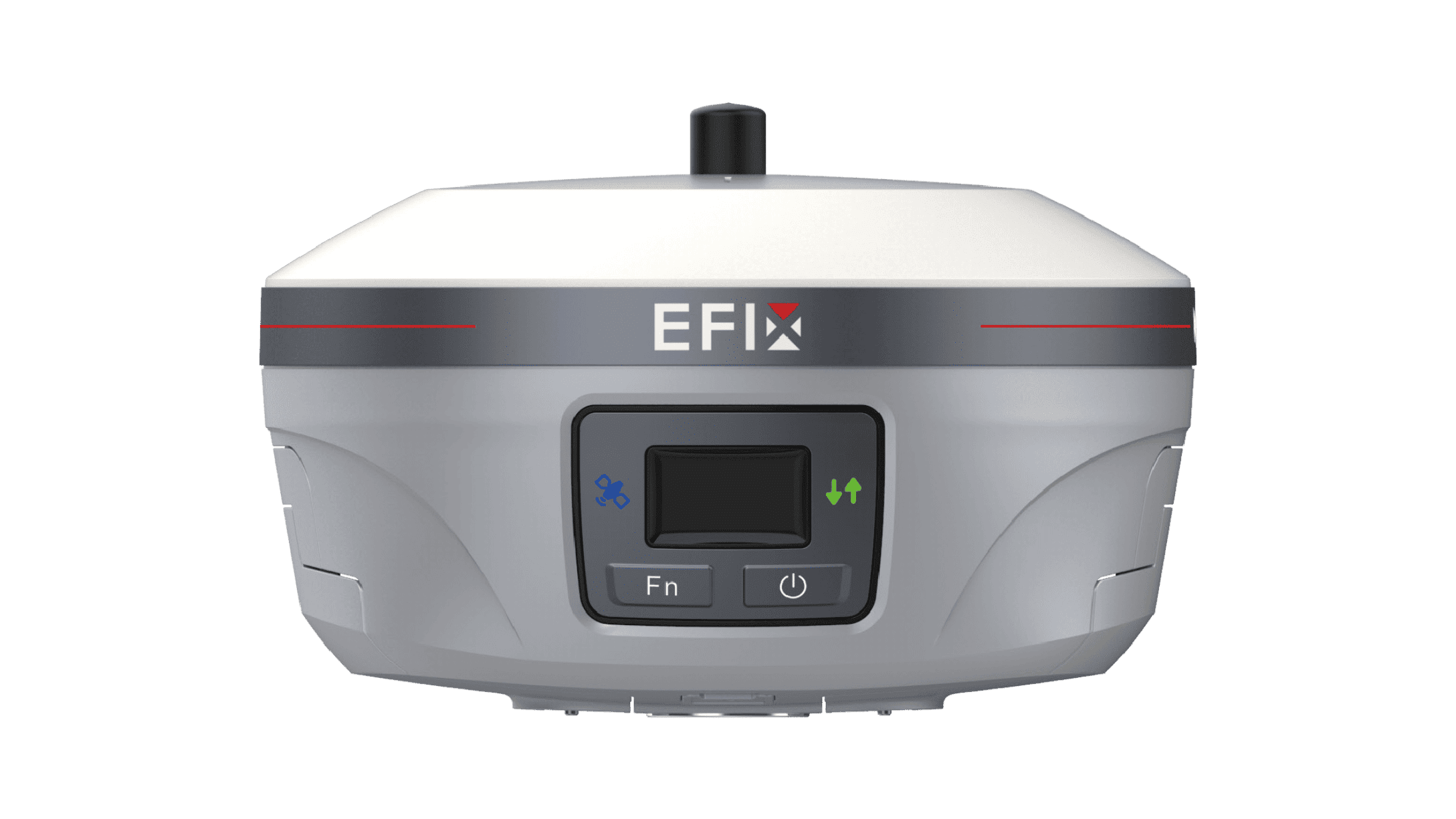
precision agriculture guidance system

The Limitations of Traditional Approaches

Many farmers still rely on timeworn tactics—a hefty reliance on guesswork and a ‘one-size-fits-all’ mentality. I once visited a farm in Hampshire where the owner used the same fertilisation strategy across different crops. Unsurprisingly, the results were less than satisfactory. Traditional solutions often ignore vital variables, leading to excess waste and missed opportunities. Using the latest precision farming equipment can revolutionise this approach, offering tailored solutions based on real-time data.

Why Is This Approach a Game-Changer?

Integrating modern technology enables farmers to capture essential data at every growth stage, facilitating smarter decisions. Just think about it: using drones to monitor crop health or soil sensors to optimise irrigation can drastically turn things around. What’s the catch? Investing in precision farming isn’t merely a cost—it’s an opportunity to elevate your farming practices to a whole new standard.

Looking Ahead: The Future of Farming

As farmers embrace innovation, the prospects look bright. Investing in precision farming equipment creates avenues for heightened yield performance. With each passing year, new technologies emerge that promise to streamline operations and diminish costs. For instance, variable rate technology allows farmers to adjust inputs according to specific field zones, revolutionising resource allocation. Just imagine—cutting down costs significantly while boosting output. Sounds fantastic, right?

precision agriculture guidance system

What’s Next for Precision Agriculture?

It’s essential to understand that success hinges not just on the tools, but on the mindset. Farmers must evolve from mere users of technology to proactive seekers of innovation. Adapting sustainable practices today ensures a brighter tomorrow, paving the way for a vibrantly efficient agricultural landscape. Reflecting on my experiences in this industry, I have seen firsthand the transformations that adopting these technologies can bring. Investing today could lead to unparalleled efficiency and sustainability tomorrow. Why settle for less? Together, we can cultivate a future where we push boundaries and elevate farming to new heights.

Lessons Learned: Evaluating Your Options

This journey highlights vital insights: embrace change, leverage technology, and remain open-minded about innovation. For those assessing solutions, pay keen attention to three vital metrics: ease of integration, potential ROI, and robust support services. These factors are instrumental in determining the right tools for your needs. Ultimately, the goal is clear: revolutionise your farming practices and witness the transformative effects of precision agriculture firsthand. By choosing to work with visionary brands like EFIX, you harness expertise and cutting-edge technology to propel your farming operations into the future.

Recent Posts

  • Comparative Paths: Choosing the Right Storage Stack for Commercial Solar Systems
  • Sliding Window with Screen vs. Wide-Opening Sliding Solutions | Premium Solutions by Zekin Window | Professional Architectural Hardware
  • How Additive Manufacturing and Rapid Tooling Accelerate Global Demand for Dual-Extruder 3D Printers
  • When Pulse Time Paints Steel: Mastering Color Marking on Stainless with High-Power Fiber Lasers
  • Strategic Data Budgeting: Maximizing Corporate Output with High-Demand EU eSIMs

Recent Comments

No comments to show.

About Me

About Me

Designer

Sed ut perspiciatis unde omnis iste natus sit voluptatem accusantium dolor emque.

Keep in touch

Facebook Twitter Instagram Pinterest Behance Youtube

Popular Posts

  • 1

    Керамический SMD пакет: преимущества и современные технологии

  • 2

    Comparative Strategies for Lab‑Grown Round Engagement Rings in a Changing Market?

  • 3

    Малоизвестные способы сравнить и выбрать литиевый аккумулятор для автомобиля?

  • 4

    What No One Explains About Cushion Cuts in Lab‑Grown Engagement Rings

  • 5

    新時代駕駛方案:發現AION AUTO的秘密

  • 6

    Секрет выносливости аккумуляторов OPzV? Сравнительный взгляд на выбор производителя и подводные камни

Categories

  • App Design (6)
  • Business (115)
  • Global Trade (109)
  • Industry (114)
  • Market (102)
  • Tech (119)
  • UI/UX (7)
  • Web Design (7)
  • Facebook
  • Twitter
  • Instagram
  • Pinterest
  • Behance
  • Youtube
  • Bloglovin
thehitc
  • Home
  • Design Update
  • Business
  • Global Trade
  • Industry
  • Market
  • Tech