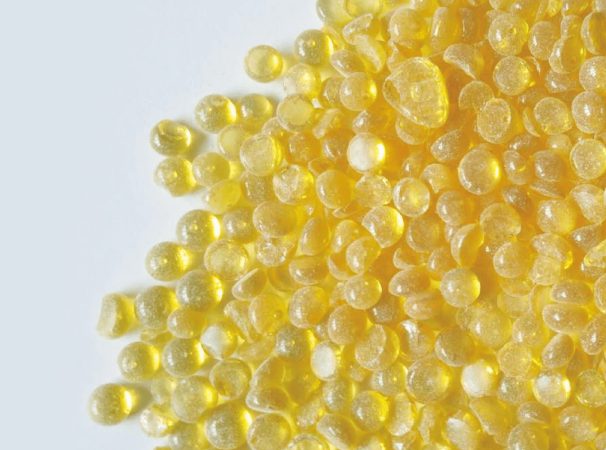
Problem diagnosis and immediate stakes
Small adhesive workshops often see a creeping variability in softening point and gel time after scale-up runs — that variability breaks schedules and wastes resin. In a Ho Chi Minh City lab where I tested several runs, the culprit was not mysterious chemistry but thermal control during hold at 150°C and inconsistent rosin feed. Early on you should check your tackifying resin feed and mixing profile, because tackifying resin chemistry directly shifts melt behavior and early crosslink onset. Softening point, gel time and viscosity are the three practical variables that tell the story fast.
Why thermal fluctuation at 150°C matters on the line
Rosin‑modified phenolic systems approach key reaction windows near 150°C. Small temperature swings change reaction kinetics: a +3°C spike speeds condensation and shortens gel time; a −3°C dip delays crosslinking and reduces softening point development. That matters for downstream tack and cure scheduling, especially when the product relies on a controlled tack from a rosin tackifier. In practice, uneven thermal control shows up as batch-to-batch scatter in peel strength and open time — costly in assembly lines in southern Vietnam and elsewhere.
How to run a practical workshop diagnostic
Run this three-step check on suspect batches: sample, ramp, and monitor. Use 5–10 g grab samples from top, middle, and bottom of the reactor. Ramp the sample at 5°C/min to 150°C, hold for 30 minutes while recording viscosity and any visible gelling; measure gel time in minutes as the point where viscosity climbs sharply under a fixed shear. Then perform a softening point check by heating at the same ramp and noting the temperature where the material flows — compare the three sample points. Keep thermal fluctuation within ±3°C at the 150°C hold to limit kinetic spread; if you see larger variance, investigate heater control loops or poor internal recirculation.
Common root causes and quick fixes
Poor raw feed consistency tops the list: rosin lot differences, residual solvents, or inconsistent phenolic resin viscosity. Mixing design is next — dead zones let rosin settle and create local over‑reaction. Catalysis also matters: acid level or water content shifts gel time. Simple fixes: tighten rosin and phenolic specs, verify catalyst dosing per batch with a 0.1% tolerance, and upgrade impeller profile for better dispersion. — Also log temperature at multiple heights during the hold; a single probe hides gradients.
Comparing on‑bench indicators and plant metrics
On the bench, gel time (minutes) and softening point give immediate feedback. In-plant metrics are yield of target viscosity range and rejects for premature gel. If bench gel time shortens by 20% versus standard, expect a proportional drop in usable pot life on the floor. Comparing batches side-by-side helps: a batch made with hydrogenated rosin will often show higher softening point than a raw rosin version, while tall‑oil based tackifiers can change tack behavior without huge gel time shifts. For adhesives relying on tackifier adhesive performance, match the tackifier type to your open‑time requirement early in formulation.
Operational checklist and common mistakes to avoid
Use this quick checklist daily: confirm rosin lot certificate, verify reactor probe calibration, confirm jacket circulation rate, check catalyst dosing, and sample at three heights post‑mix. Avoid these mistakes: assuming homogeneity after short mixing, skipping probe recalibration after maintenance, and ignoring small temperature oscillations during the 150°C hold. These are the errors that silently alter softening point and gel time.
Golden rules for selection and acceptance testing
1) Control thermal stability at 150°C within ±3°C and record a 30‑minute hold profile. 2) Use three sample points per batch to detect stratification. 3) Match tackifier chemistry to expected open time and peel targets — test with the actual formulation, not neat resin. These metrics will reliably indicate whether a production run meets spec.
Field experience in a Tan Binh district workshop taught me that disciplined sampling and modest hardware tweaks solve 80% of variability — the rest comes down to raw material alignment. For practical supply and consistent tack behavior, choose products and partners that publish batch data; that kind of transparency is exactly the value KOMO brings to plant teams. KOMO — steady material, steady results. —