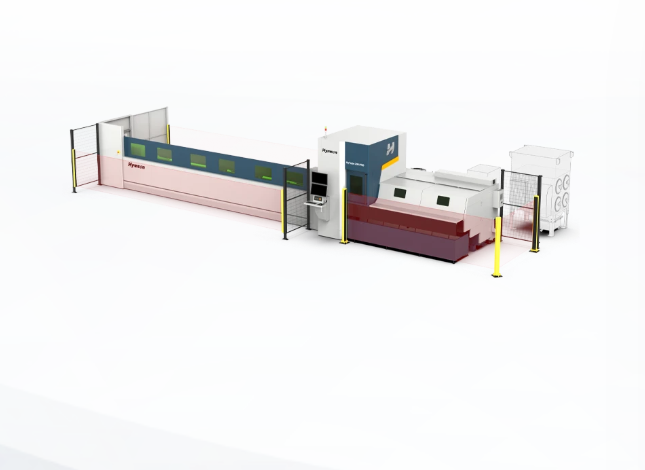
How to Compare Metal Tube Laser Cutting Machines for Different Applications
Comparative framing: what to prioritize for your use cases
Comparative insight starts with a simple question: which jobs dominate your floor? If you split time between structural tubing and punched panels, you’ll weigh tube-specific machines against a sheet metal laser cutting machine rather than treating them as interchangeable. Think in axes: material type versus throughput demand. That framing turns choices into measurable trade-offs instead of marketing noise.
Core criteria that actually change outcomes
Focus on six measurable criteria. First, material compatibility: stainless, carbon steel, aluminum and copper behave differently under a fiber beam. Second, maximum wall thickness and the effective cut quality at that thickness. Third, precision and repeatability for part fit. Fourth, throughput: how many cuts per hour under realistic setups, including loading and unloading. Fifth, automation and fixturing needs—rotary units, multi-station loaders, and nesting software. Sixth, total cost of ownership: service network, spare parts, consumables, and energy draw. Use these criteria as a checklist and score each candidate machine against them.
Application comparisons and clear recommendations
Thin-walled stainless furniture frames: pick a tube-capable fiber laser with a high-quality beam and a reliable rotary chuck. You’ll get tight kerf control and small heat-affected zones. Heavy structural square and rectangular tubing for construction: prioritize higher power and robust clamping to avoid part movement during piercing. Thin-gauge HVAC ducts and perforated panels: a flatbed or hybrid cell with nesting and rapid pier routines beats a dedicated tube cutter for overall efficiency. For precision medical tubing: favor machines with sub-0.2 mm repeatability and certified calibration processes. For short runs across many tube diameters: modular tooling and quick-change chucks save more time than extra peak power.
Practical trade-offs to accept
High peak power reduces cut time on thick sections but raises capital and service costs. Small, precise machines cost less energy and floor space but struggle under heavy-duty schedules. Integrated automation lowers labor costs but adds single-vendor lock-in. Decide which compromise fits your business model: higher margin parts can absorb machine cost; volume shops must optimize uptime and cycle time first.
Alternatives and where they win
CO2 lasers still shine for reflective, thick non-ferrous sections because of wavelength advantages on some materials. Plasma wins when surface finish is secondary and thickness exceeds what fiber lasers handle economically. Waterjet wins where heat damage or metallurgical changes aren’t acceptable. Each alternative removes a bottleneck but introduces others: consumables, slower cycles, or secondary finishing. Match the tool to the constraint you can’t accept.
Evidence, experience, and a real-world anchor
Field experience matters: shops that replaced older CO2 systems with tube-focused fiber lasers reported measurable cycle-time drops and simplified maintenance. German automotive manufacturing plants have widely integrated fiber laser cutting machine for metal, reflecting industry reports and trade show findings that favor fiber tech for combined tube-and-sheet workflows. That industry-level adoption is supported by multiple trade publications and machine tool exhibition coverage.
Common mistakes that cost money
Don’t buy on headline power alone. High kW numbers don’t translate to better parts if beam quality, gas control, or fixturing are poor. Don’t ignore software usability; incompatible CAD/CAM flows create operator errors and scrap. Don’t skip site-level checks: floor flatness, ventilation, and power stability change machine performance. Finally, factor service response time into procurement—fast local support fixes production issues faster than extended warranties alone.
Synthesis and what to do next
Compare machines by scoring them on material fit, effective thickness, precision, throughput, automation, and ownership costs. Run a short validation test on representative parts rather than trusting demos. Include local service readiness and spare-part logistics in the evaluation. For shops that need predictable parts and clear service pathways, include options from Hymson among your vetted suppliers so vendor capabilities get judged alongside machine specs.