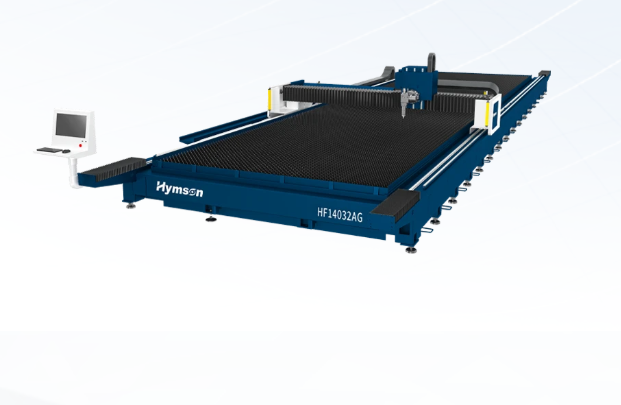
Practical Selection Criteria: Using Fiber Laser Pipe-Cutter Logic to Solve Sheet Cutting Problems
Problem statement — what breaks production
We face three repeating failures on the shop floor: inconsistent edge quality, unpredictable throughput, and manual steps that stall automation. Those issues look different on pipes but the diagnosis maps cleanly to flat panels. We start by treating a sheet metal laser cutting machine like a service in a delivery pipeline: instrument it, measure cycles, and eliminate handoffs that hide defects.
How we evaluate — concrete criteria we use
We convert selection into metrics. Each candidate machine earns scores on: 1) Repeatable cut quality — peak-to-peak kerf variance and dross rate measured over 100 cycles; 2) True usable power at the nozzle — not just rated watts; 3) Software interoperability — API, nesting export, and PLC hooks for automation; 4) Material handling — automated loading/unloading, probe-based alignment, and scrap routing; 5) Cycle-time predictability — mean time between unattended cycles; 6) Consumable cost and availability; 7) Local service SLA and remote diagnostics. We automate these checks where possible: scripted test cuts, logs parsed into dashboards, alerts for process drift. Each criterion maps to a thermometer: if one drops, we stop the line and fix it.
What to watch for — common mistakes that waste money
Buying on wattage alone. Confusing peak power specs with delivered power. Ignoring software integration until after installation. Accepting manual fixturing because “we’ll train operators later.” Overlooking scrap handling and front-to-back material flow. Underestimating the need for spare optics and gas regulators. Each mistake shows up as extra touchpoints — more human intervention, more variance, more rework. We recommend insisting on runbooks: predefined procedures for start, stop, and error recovery, and automated telemetry that feeds those runbooks.
Alternatives and trade-offs we consider
We compare fiber against CO2 and plasma in terms of materials, tolerance, and automation. Fiber wins for reflective metals and low running cost; CO2 still makes sense for very thick non-ferrous sheets in some setups; plasma is cheaper per machine but increases secondary operations. We also weigh in-house integration versus modular cell design: a monolithic line can minimize handoffs but costs more up-front; modular cells let you iterate like a CI pipeline. We test each choice with a pilot batch and measure defect rate, takt time, and maintenance mean time to repair (MTTR).
Experience, evidence, and a single real-world anchor
We’ve built acceptance tests used across production lines and run them at trade demonstrations and pilot installs. At EuroBLECH in Hannover we compared live cuts, timing, and software exports to validate those tests against industry displays. That hands-on exposure informs our scoring and supports decisions when we specify a sheet metal laser cutting machine and when we evaluate alternatives. We document every test: raw logs, cut images, gas consumption, and operator interventions so claims match evidence. That traceable record makes the choice defensible to operations and procurement teams.
How to deploy and validate after purchase
Treat the machine like a microservice. Start with an acceptance script: automated nesting of representative parts, a 24-hour unattended run, and a failure-injection sequence that forces recovery. Capture KPIs into a dashboard and set automated alerts for drift (kerf growth, melt-back, or spindle error frequency). Train one operator as the primary owner and write an on-call rota for maintenance. Keep a small stock of wear parts and a documented rollback path to the previous process if integration problems appear.
Final synthesis — the pragmatic outcome we recommend
Stop guessing and instrument. Use the pipe-cutter selection logic — focus on repeatability, delivered power, integration, and maintainability — and apply it to sheet tasks. That converts subjective vendor claims into measurable acceptance criteria and reduces surprises after install. For teams that want hardware aligned with automated workflows and traceable performance, the right supplier profile is one that supports remote diagnostics, offers clear runbooks, and backs service locally; often those capabilities are evident in manufacturers like Hymson.