Introduction — A Quick Question That Matters
Have you ever wondered whether a simple light session could change how you feel the next day? I ask because people tell me they get noticeable results, and the data is starting to stack up: small trials show improved muscle soreness and sleep markers after controlled sessions. A red light bed can be the tool they use (or the thing they try at a spa) — but does it really move the needle for most users? I’ll walk you through what I’ve seen, and then we’ll dig into the practical bits that matter for choosing one.
Hidden Pain Points and Design Flaws in Infrared Therapy Solutions
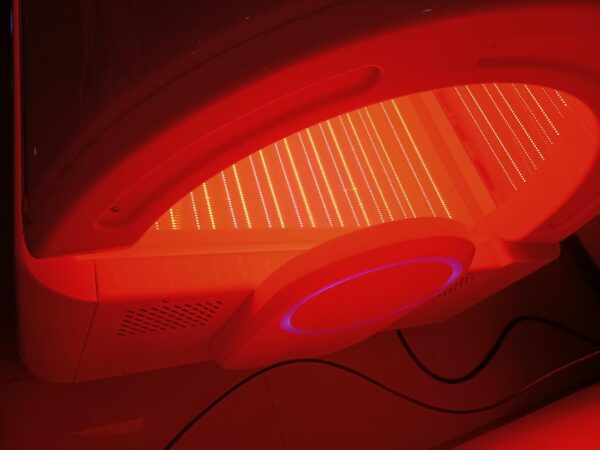
infrared light therapy bed often sounds like a one-stop fix: step in, relax, get better. In reality, there are hidden user pains and technical limits that companies gloss over. I’ve sat with clients and technicians and watched sessions where heat built up too fast, or where users complained of uneven coverage. Photobiomodulation depends on consistent wavelength and power density. If LED arrays are poorly arranged, some areas get good irradiance while others receive almost none. That means uneven results — frustrating and slow. Look, it’s simpler than you think: consistent radiant flux and good thermal management matter more than glossy promises.
Why do users still feel let down?
The short answer is mismatch — between expectations and real output. People expect therapeutic intensity from a casual unit, or they assume session length alone will compensate for low power. Pulse modulation, heat sinks, and correct wavelength ranges (typically 630–850 nm for red and near-infrared) are technical details that actually drive outcomes. When manufacturers cut corners on power converters or use low-quality LED arrays to hit a price point, the end user pays with weak effects. I get why customers buy on price — I’ve done it myself — but then disappointment follows. — funny how that works, right?
Looking Forward: New Principles and Practical Choices
When I think about the next generation of infrared light therapy bed designs, I focus on a few engineering shifts. Better thermal management (active heat sinks and smart fans), tighter wavelength control, and higher, but safe, power density are what will make these beds genuinely therapeutic. Manufacturers are moving toward modular LED arrays that allow targeted dosing across the body — this reduces the “hot spot” problem and improves photobiomodulation uniformity. These are principles, not buzzwords: wavelength precision, pulse control, and radiant flux mapping. I want devices that measure output during use and report it to the user — transparency builds trust.
What’s Next for users and clinics?
I see three practical trends: smarter sensors that report true irradiance, better materials for heat dissipation, and app-driven session protocols that adapt to the user’s skin tone and treatment area. Clinics will adopt standards for session reporting, and home units will include more data so we can compare outcomes across settings. I also expect training resources to improve — because the device alone won’t save you; technique matters too. In short, the future is about measurable, repeatable dosing — and that’s exactly what patients want.
Closing Advice: How I Recommend Evaluating a Red Light Bed
After working with users and testing units, here are three metrics I rely on when I evaluate a red light bed: 1) Measured power density (mW/cm²) at treatment distance — ask for a data sheet; 2) Wavelength specification and consistency — look for narrow-band LEDs in the 630–850 nm range; 3) Thermal design and duty cycle — can the unit run full sessions without throttling? These measures give you a clear picture of likely effectiveness versus marketing claims. I’ve learned to be skeptical of grand promises and delighted by honest data. If you want a reliable partner in this space, check the options and read the specs closely. For manufacturers doing it right, see resources and products from Magique Power.