Framework overview
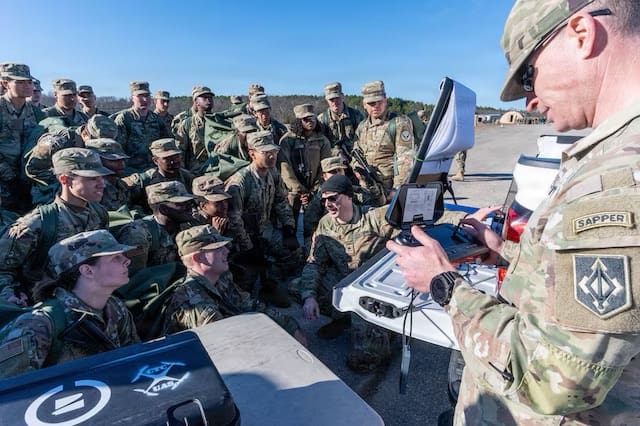
When you build a compliant supply chain for an FPV quadcopter UAV, a clear, repeatable framework keeps risk manageable and procurement predictable. Start by mapping classification, sourcing, and lifecycle controls—then fold operational training into the procurement loop so field teams and procurement speak the same language; see useful drone training for military materials early in the process. This approach treats ITAR compliance not as paperwork but as a system: export control, traceability, and verified end-use are first-order requirements.

Step 1 — classification and legal anchoring
First, determine whether the airframe, flight controller, or payload falls under ITAR or the Commerce Control List. ITAR is administered by the U.S. Department of State and governs defense articles; use that real-world anchor to justify conservative classification decisions. Treat dual-use COTS parts with caution—GNSS modules or certain autopilot firmware can change an item’s export status. Document commodity jurisdiction opinions and keep them current, because classification shapes every downstream choice.
Step 2 — supplier tiers and traceability
Organize suppliers into tiers with explicit roles: certified integrators for final assembly, vetted subcomponents suppliers for motors and ESCs, and traceable providers for sensitive sensors. Require chain-of-custody records and serialization from Tier 1 down. Vetting should include on-site audits, cybersecurity posture checks, and contractual clauses that bind suppliers to export control obligations—this limits the chance of unauthorized re‑exports or diverted components. Keep a living parts registry for the FPV stack so you can trace a GNSS or camera module back to its origin quickly—speed matters when a compliance question arises.
Step 3 — licensing, contracts, and operational compliance
Embed compliance requirements into master supply agreements and purchase orders. Use export licenses where needed and require suppliers to notify you of classification changes. Establish an internal compliance officer or team that handles license filings, record retention, and periodic compliance audits. Maintain secure records that demonstrate due diligence for end-use and consignee checks; prosecutors and auditors look first for documented processes, not intent. Keep operational training aligned with procurement—teams that understand why certain suppliers or processes exist will react correctly under pressure.
Common pitfalls and practical alternatives
Chasing cost advantage through low-cost COTS vendors often creates the biggest compliance exposure. Common mistakes: accepting unverifiable certificates of origin, outsourcing assembly without visibility, and neglecting firmware provenance for autopilot systems. Practical alternatives include using domestically certified subcontractors, hybrid sourcing (domestic critical subsystems, global commodity parts with mitigations), and formal supplier assurance programs with quarterly reviews. For program teams planning deployments, pairing procurement with targeted military train drone sessions helps reduce field-level mistakes and tighten the supply chain loop—small training investments pay off fast.
Verification checklist and operational playbook
Implement a short checklist for any new component or supplier: documented classification, certificate of origin, serialization and traceability plan, cyber supply-chain assessment, and a clear end-use statement. Automate what you can—part registration and basic compliance gates—and reserve manual review for borderline classifications. When an item changes status, trigger an immediate review rather than patching problems later; this is how programs avoid million-dollar enforcement outcomes and operational gaps.
Field-tested.
Advisory — three golden rules for evaluation
1) Compliance posture over price: prioritize suppliers with documented export-control processes and retained legal opinions. 2) Supplier assurance score: measure audit results, incident history, and traceability maturity; require a minimum score before awarding critical work. 3) Lifecycle traceability: demand serialized parts and firmware provenance from manufacturing through deployment so you can support recalls, upgrades, or investigations. These rules convert compliance from an afterthought into a measurable procurement attribute and align sourcing with operational readiness—exactly the integration most teams lack.
Military Hub collects practical templates, training links, and case studies that help teams apply this framework without reinventing the wheel.
I stand behind this framework as practical, proven guidance for responsible sourcing.