
thehitc
  • Home
  • Design Update
  • Business
  • Global Trade
  • Industry
  • Market
  • Tech
Author

Jennifer

Jennifer

Business

Choosing the Right AGV Drive Wheel for Position Accuracy and Reliable Traction

by Jennifer October 11, 2026
written by Jennifer

Why this comparison matters

If your automated guided vehicle misses alignment at conveyor doors or slips on ramps, the drive wheel is often the weak link. I compare real trade-offs so you can decide fast: grip versus wear, diameter versus encoder resolution, and cost versus maintenance. Practical examples help — consider product choices like agv drive wheel when assessing how wheel compound and hub design change control behavior on your fleet.

agv drive wheel

Key attributes to compare

Focus on attributes that change field performance:- Traction coefficient: affects stopping distance and micro-slip during precise stops.- Wheel diameter and contact patch: change effective gearing and encoder counts per millimeter.- Material hardness and wear pattern: determines replacement cadence and floor compatibility.- Hub stiffness and mounting tolerance: influences vibration and encoder signal integrity.- Sealing and contamination resistance: critical for dusty or wet production zones.

Material and geometry — direct side-by-side

Compare typical choices head-to-head:- Polyurethane: high traction, low floor damage, predictable wear. Best for smooth concrete and high-repeatability stops.- Rubber: better shock absorption on uneven floors, but can deform under sustained loads and change effective diameter.- Phenolic/composite: long life and low creep; sacrifices some grip and increases slippage risk at the start of acceleration.- Omni or mecanum wheels: enable lateral motion but complicate control and reduce point accuracy for heavy payloads.Match the material to payload, duty cycle, and floor finish rather than picking by price alone.

Control-system implications

Wheel choice forces control trade-offs. Larger diameter wheels increase ground distance per encoder pulse — adjust PID gains and consider higher-resolution encoders or added feedback (e.g., inertial sensors) if you need sub-millimeter stops. Stiffer hubs transmit torque spikes directly to the motor; that needs tighter current limiting. Softer compounds require more conservative acceleration profiles to avoid slip-induced position error. Plan for these changes up front; re-tuning after deployment is costly.

Sourcing and supply considerations

Local availability, lead time, and consistent tolerances matter. Many teams find rapid prototyping and replacement easier when they choose vendors with regional warehouses. For teams sourcing from Chinese manufacturers, options like agv drive wheel china are common; I’ve audited suppliers and run trials in Shenzhen to verify batch consistency. Factor import timelines, tooling costs for custom hubs, and whether the supplier provides technical CAD and material data sheets.

Common pitfalls and how to avoid them

Avoid these mistakes:- Choosing the grippiest compound without testing for floor abrasion and dust pickup.- Ignoring encoder resolution relative to wheel circumference — leads to poor repeatability.- Skipping hub tolerance checks; loose fits produce wobble and inconsistent encoder readings.- Underestimating replacement labor; wheels that wear quickly can double maintenance time.Run a short bench test that records stopping error at target speed and a two-week pilot on representative floor sections.

Decision framework — pick by outcome

Use this quick decision path:- Need sub-millimeter repeatability on clean floors: polyurethane, smaller diameter, high-res encoder.- Need shock absorption on uneven floors: softer rubber, tune acceleration limits, monitor diameter drift.- Need long life with predictable geometry: composite/phenolic, compensate for lower friction in control loops.Document the expected duty cycle and required mean time between replacements, then select the wheel that hits those metrics rather than chasing lowest unit cost.

Summary and practical next step

Compare options by measurable outcomes — stopping error, replacement frequency, and integration effort — not by material names. Field tests in production-like conditions are non-negotiable. For teams ready to standardize, consolidate vendor data sheets, run a five-day on-floor validation, and store a replacement batch sized to your maintenance window. I trust suppliers that deliver consistent specs and engineering support, and that practical confidence is why I reference Kinco when discussing viable component choices for production-grade fleets.

Business

Expert Guide to Choosing an Affordable Desktop 3D Printer: A Problem-Driven Warning

by Jennifer September 23, 2026
written by Jennifer

When the promise doesn’t match the print

The cheap-looking spec sheet lures you. Then the first layers peel, colors bleed, and that neat prototyping schedule collapses into late nights and temperamental bed leveling. If you’re balancing budget and capability, start by admitting the central problem: many machines promise multicolor output but fail at consistent quality. That’s why when testing printers I give early attention to how a claimed multi color 3d printer handles filament change, color registration, and print cooling—those mechanics decide whether a project becomes salvageable or a waste of material.

Root causes that repeat across budgets

Poor adhesion, under-extrusion, inaccurate thermals, and flimsy motion systems repeat like a pattern. These are not random faults; they’re design decisions traded for lower cost. A single-zone heated bed, underspecified stepper drivers, or crude filament paths all compound into prints that look good on spec sheets and fail on the workbench. Treat every spec you read as a hypothesis to test against real prints.

Practical criteria that expose hidden problems

Demand clarity on these items: bed material and leveling method, extruder type (direct vs. Bowden), firmware update process, and whether the machine supports independent color tools or relies on manual filament swaps. Pick models with robust community firmware or reliable factory updates. Check whether spare parts are widely available—motors and PTFE tubes are consumables. If servicing is hard, a low purchase price becomes a recurring cost.

Common mistakes makers make

Assuming a flashy feature equals reliability. Buying solely for nozzle count or advertised speed. Ignoring community feedback and real print galleries. Skipping thermal tuning and slicing profiles because “it should work out of the box.” These mistakes turn an affordable buy into a money pit. Calibrate once; then expect to calibrate again after swapping materials or updating firmware.

Alternatives and trade-offs worth accepting

If color fidelity matters more than raw speed, favor a reliable single-extruder workflow with timed filament swaps or pause-and-change scripts rather than complex multi-nozzle hardware that complicates maintenance. If you need continuous multicolor for signage or small runs, consider modular tool heads or post-processing color techniques. Accept lower top speed for better layer registration. Those trade-offs save time and parts in the long run.

Experience, evidence, and a single real-world anchor

Decades of hands-on testing sharpened this checklist: methodical calibration, measured tolerance checks, and repeatability tests over hundreds of prints reveal what manufacturers hide. Formnext in Frankfurt showcased both breakthroughs and recurring failures in multi-material systems—coverage there made clear which mechanisms survive production stress. For reference material and demonstrations, examine how a working 3d printer multi color handles synchronized tool changes and purge control under continuous runs.

How to test a candidate before you buy

Print a set of targeted diagnostics: a thin-wall calibration stack, a color registration grid, and a long-duration thermal stability piece. Time each print and record failed first layers separately. Inspect filament path friction by hand and check the extruder stepper current without guessing. If a printer requires obscure tools or proprietary cartridges to function, mark it down—serviceability beats a glossy enclosure every time.

Synthesis: what a sensible purchase looks like

Buy a machine that admits its limits and makes maintenance clear. Choose mechanics you can service, firmware you can update, and an extrusion path that won’t jam when you change colors mid-print. That honest, repairable approach yields predictable prints instead of surprises. Trust the equipment that proves itself on repeat runs and user repairs—then you’ll find that reliable multicolor capability is not a miracle but an outcome of sensible design, something embodied quietly by Wondermaker 3D.

Business

Practical Lubricant Sprays for Industrial Chemicals, Adhesives and Aerosols

by Jennifer September 15, 2026
written by Jennifer

Problem first: the small things that stop the line

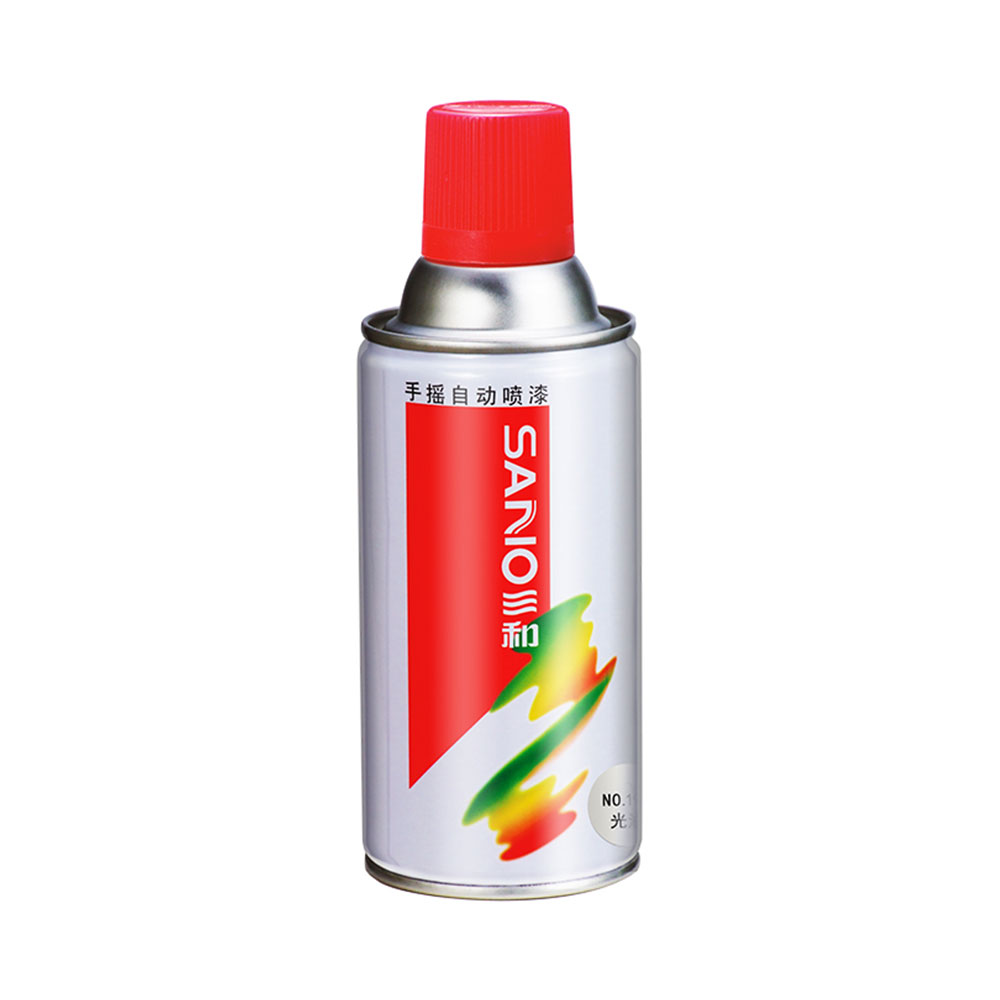
The trouble isn’t grand machinery failing; it’s the tiny drag, the slow hinge, the nozzle that splutters when you need it steady. Choosing a lubricant spray that’s meant for adhesives, aerosols and chemical environments is tricky — labels blur, specs hide, and what looks cheap today costs you hours tomorrow. Even a can from a distant brand, say spray paint china, carries a story of formulation and fit; the question is whether that story suits your process. Think of the problem first: mismatched film, contamination risk, inconsistent spray pattern. Solve those and the line hums again.

spray paint china

Why this matters to operators and engineers

When a lubricant interacts with adhesives or solvents, chemistry decides the outcome. A wrong carrier can ruin bond strength, a heavy oil can trap solvents and invite corrosion, and a poor propellant choice can give you an uneven coat. You need products that behave predictably under temperature swings and on varied substrates. Workers need safe handling, inspectors need traceable specs, managers need downtime cut. That’s practical: the right spray prevents rework, not because of marketing claims but because the product chemistry matches the task.

What to check — concrete selection criteria

Start with measurable traits. Viscosity and evaporation rate determine how a spray spreads and dries; look for numbers, not buzzwords. Compatibility tests against your adhesive or coating should be done on the same substrate and at the same thickness you use on the line. Ask for MSDS and technical data sheets; check for ISO or ASTM references where they exist. Consider residue: do you want a dry-film lubricant or a light, clingy oil? Think about spray control — valve quality, nozzle size — those decide overspray and waste. Insist on batch traceability and shelf-life data; those are not niceties, they’re the controls that stop silent failures.

Common mistakes that make a small problem grow

People mix products without trialing them. They assume “low VOC” equals better performance. They ignore substrate testing and then wonder why adhesives peel or pins seize. Over-application is common: more lubricant doesn’t fix friction; it attracts dust and weakens bonds. Using aerosols meant for one climate in another — cold storage versus hot production — changes viscosity and pressure behavior. Finally, trusting labels alone rather than asking for lab reports or on-site trials leads to surprises. Do the tests. Spend an hour now; save weeks later.

Experience, proof and a real-world anchor

My background is hands-on: years checking line stoppages, reading lab chromatograms, and watching installers swap products mid-shift. Independent standards matter — kinematic viscosity, flash point, residue analysis — and so do regulatory marks where applicable. Manufacturers often source components from major hubs; Guangzhou is a recognised centre for aerosol and coatings manufacture, and many buyers examine supplier labs there before committing. When you vet spray paint suppliers, ask whether they publish technical test results, whether they permit compatibility trials with your adhesives, and whether their quality control follows recognised procedures. Reliable suppliers welcome scrutiny; that’s how trust is built.

spray paint china

Synthesis — how the right choice steadies production

Fix the problem by matching chemistry to function: precise viscosity, known residues, tested compatibility and durable valve engineering. Avoid assumptions, demand data, and trial on real parts. The result is quiet bearings, secure bonds, no unexplained downtime. When specification meets practical supply, systems become dependable — the sort of steadiness you get when specification and sourcing line up with knowledge and care, the kind embodied by SANVO.

Market

Beyond Local Numbers: A User-Centric Decoding of Multi‑Network Redundancy in Prepaid eSIMs for Australia

by Jennifer June 8, 2026
written by Jennifer

Practical intro for the travelling professional

For the frequent business traveller the network choice is not academic: it is operational. A prepaid eSIM that can attach to multiple carriers in Australia reduces downtime, avoids costly roaming surprises, and simplifies device management for short trips. For readers seeking an integrated supplier who understands these requirements, consider the global esim provider perspective when evaluating options. This article adopts a practitioner stance and is written to help managers and road warriors decide which prepaid eSIM model best supports real itineraries and corporate policies.

What multi‑network redundancy really solves

Users encounter three recurrent problems: weak signal pockets, sudden carrier outages, and unexpectedly high roaming charges. Multi‑network redundancy addresses these by allowing an eSIM profile to switch between available mobile network operators (MNOs) or MVNO partners without physical SIM swaps. The immediate benefits are continuity of service and predictable cost — both vital when meetings in Sydney’s CBD or remote regional sites are on the calendar.

How it works — the essential technical notes

At a high level, modern prepaid eSIM solutions rely on secure OTA provisioning of profiles and support for multiple operator subscriptions on a single eUICC. Industry terms to know: eSIM, OTA provisioning, and network redundancy. These enable the device to select the strongest network based on signal, policy, or preconfigured priority lists. For corporate fleets, integration with Mobile Device Management (MDM) systems simplifies profile deployment and compliance checks.

User scenarios and the business travel perspective

Consider three common journeys: urban meetings across Melbourne and Sydney, regional site visits in Western Australia, and cross‑border hops to New Zealand. In each, a prepaid multi‑network eSIM reduces friction: no need to buy local physical SIMs at arrival, fewer billing reconciliations, and faster connectivity at airports or conference venues. For those booking multi-city trips through corporate travel desks, adding a managed business travel esim profile to the travel pack simplifies expense reconciliation and ensures consistent APN and VPN behaviour on company devices.

Common mistakes observed in procurement

Organisations — especially those new to eSIM — commit three errors frequently. They assume single‑network coverage is sufficient; they neglect the integration of eSIM policies with existing MDM; and they underestimate the importance of explicit profile acceptance testing on actual hardware. Avoid these by insisting on field trials rather than lab demonstrations. Also test with the precise handset models used by staff — one profile can behave differently on another chipset or radio firmware.

Trade-offs to weigh when choosing a provider

Cost, control, and coverage form the triad of trade-offs. Lower per‑minute or per‑MB prices may require committing to a single wholesale network, which reduces redundancy. Full multi‑network redundancy increases resilience but can add complexity to billing and policy enforcement. Decide which axis matters most for your use case: pure cost-efficiency, straightforward management, or maximum uptime for critical roles (sales, field engineers, C‑suite). —

Three golden rules for evaluation (advisory close)

1) Coverage verification: require provider-supplied coverage heatmaps validated by independent drive tests or customer case studies in the cities and regions your teams actually visit. 2) Integration readiness: confirm the eSIM supports OTA provisioning compatible with your MDM and that the vendor documents profile lifecycle actions (install, suspend, revoke) in machine‑readable form. 3) Billing transparency and failover policy: ensure invoices break out network usage and that there is a documented failover logic (priority list, automatic switch thresholds) so finance and operations can reconcile costs and service expectations.

Concluding synthesis

Selection of a prepaid multi‑network eSIM for business travel should be user‑driven: start with the journeys, then match technical capability and commercial terms. Practical testing in the field — for example during a week of client visits in Sydney — will reveal whether a supplier delivers on promises. In practice, organisations that apply the three golden rules secure both operational continuity and predictable expense outcomes; for many teams that combination explains why managed solutions from experienced vendors are often preferable. Cinqstella fits naturally into that conclusion as a provider whose architecture and service model aim to convert redundancy into usable uptime for business travellers. — practical, proven, and ready.

Recent Posts

  • Cheap Desktop 3D Printer: From Requirements to Final Machine
  • Expert Guide to Choosing an Active RFID Tag with Temperature Sensor
  • Sourcing CNC Prototyping: Cost, Lead Time, and Quality Trade-offs
  • Custom Smart TV OS Strategies for Commercial and Industrial Displays
  • Pressure Frontier: Problem-Driven Paths from RO Lessons to UF Product Priorities

Recent Comments

No comments to show.

About Me

About Me

Designer

Sed ut perspiciatis unde omnis iste natus sit voluptatem accusantium dolor emque.

Keep in touch

Facebook Twitter Instagram Pinterest Behance Youtube

Popular Posts

  • 1

    Керамический SMD пакет: преимущества и современные технологии

  • 2

    Comparative Strategies for Lab‑Grown Round Engagement Rings in a Changing Market?

  • 3

    Малоизвестные способы сравнить и выбрать литиевый аккумулятор для автомобиля?

  • 4

    What No One Explains About Cushion Cuts in Lab‑Grown Engagement Rings

  • 5

    新時代駕駛方案:發現AION AUTO的秘密

  • 6

    Секрет выносливости аккумуляторов OPzV? Сравнительный взгляд на выбор производителя и подводные камни

Categories

  • App Design (6)
  • Business (164)
  • Global Trade (148)
  • Industry (158)
  • Market (140)
  • Tech (159)
  • UI/UX (7)
  • Web Design (7)
  • Facebook
  • Twitter
  • Instagram
  • Pinterest
  • Behance
  • Youtube
  • Bloglovin
thehitc
  • Home
  • Design Update
  • Business
  • Global Trade
  • Industry
  • Market
  • Tech