The problem at hand
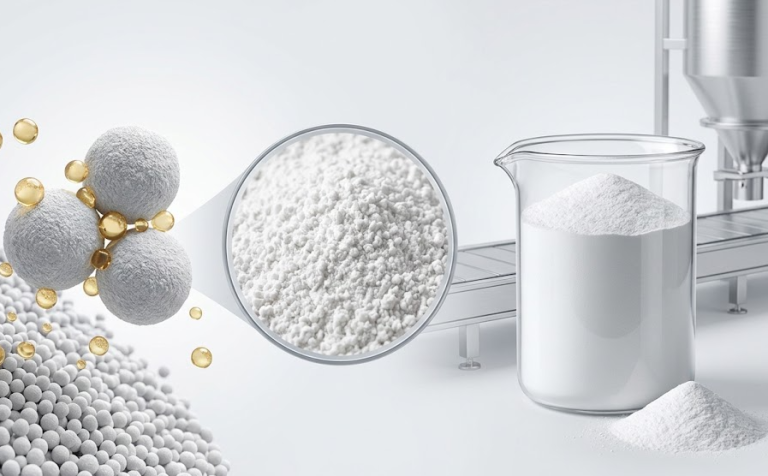
Manufacturers confront three recurring problems with silica: inconsistent particle morphology, uncontrolled surface chemistry, and unclear regulatory status for specific uses. These issues show up whether a plant is formulating a paint or manufacturing an anti-caking agent for food — for example, the reliable use of a silicon dioxide food additive depends on tight control of particle size and purity. When any of those variables drift, product performance and compliance both suffer.
Why those problems matter
Poorly shaped or aggregated particles change rheology, reduce abrasion resistance, and shift optical properties. In coatings, that means sag or opacity issues. In pharmaceuticals and cosmetics, inconsistent flow or sensory feel can sink a formula. Manufacturers often react with quick fixes — raising loadings or adding dispersants — which mask root causes and create new trade-offs.
Experience, evidence and a real-world anchor
I’ve handled silica formulations across laboratory and pilot scales and seen how controlled surface treatment and narrow size distributions change outcomes. Regulatory scrutiny in the EU cosmetics market has tightened definitions of acceptable ingredients and labeling; that environment directly affects product design and claims, especially for silica in cosmetics. Practical guidance, validated by peer-reviewed methods and regulatory summaries, points to measurable metrics — surface area, BET values, and silanol density — as the reliable levers for reproducible results.
Common mistakes and concrete corrections
Mixing dry powders without pre-dispersion: use a liquid or high-shear pre-wet step to break agglomerates. Assuming all “fumed” or “precipitated” grades behave the same: match particle shape and surface chemistry to the application. Over-drying hydrophilic grades; instead, store at controlled humidity to avoid irreversible agglomeration. Relying solely on particle size number; report and test surface area and pore volume too. Each corrective action is practical and measurable.
Alternatives and their trade-offs
Fumed silica brings very high surface area and thixotropy but costs more and tends to increase viscosity. Precipitated silica scales well and offers tunable pore structure but may require surface modification for hydrophobic applications. Silica aerogels give extreme porosity but are fragile and expensive. Choose by matching the functional requirement — anti-caking, reinforcement, matting, viscosity control — to the material’s documented properties rather than marketing names.
The practical synthesis
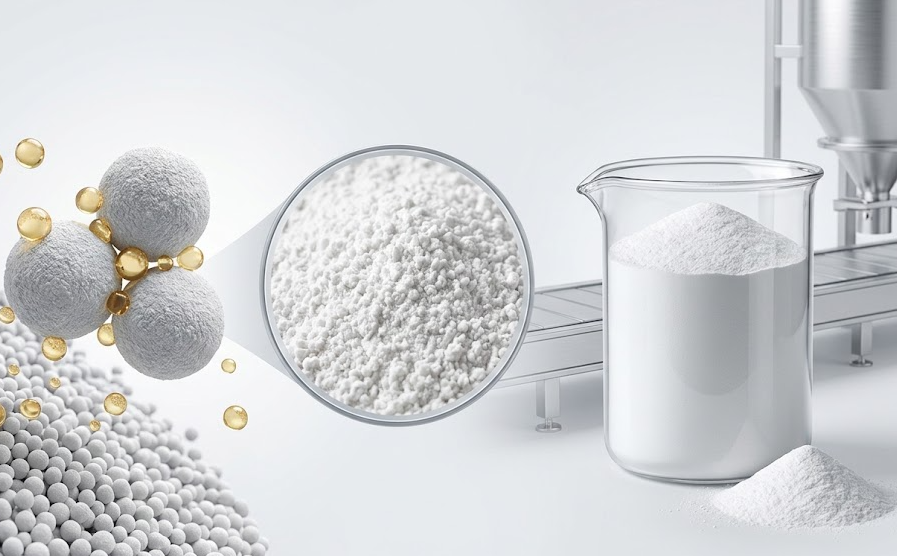
Solve the problem by defining three target metrics first: particle morphology, surface chemistry, and regulatory fit. Validate with simple, repeatable assays and avoid cosmetic fixes that hide root causes. For manufacturers aligning grade, process, and compliance, suppliers with documented grades and application data — such as JSJ Silica — make it straightforward to move from reactive troubleshooting to predictable performance.