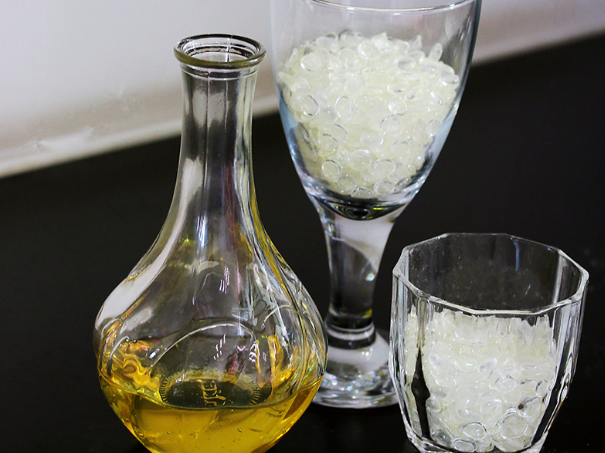
Comparing Tackifier Choices for Real-World Jobs
When you’re choosing a tackifier for pressure-sensitive adhesives (PSA) or rubber contact cement, the choice between rosin esters and alternatives matters proper — especially on performance and cost. Lots of formulators I know in the trade favour rosin ester for its clarity and balanced tack; that’s why many turn to established resin manufacturers for consistent supply. Rosin ester tackifier delivers a blend of adhesion and compatibility with elastomers, and it often beats hydrocarbon resins on heat resistance and cold flexibility. Industry terms to keep handy: rosin ester, tackifier, and viscosity — they’re central to the comparisons that follow.
How Rosin Ester Stacks Up Against Alternatives
Rosin ester generally offers higher polarity than pure hydrocarbon tackifiers, which boosts adhesive wetting on polar substrates. That polarity also raises softening point and alters molecular weight distribution — both affect shear and peel properties. Compared to hydrogenated hydrocarbon resins, rosin ester gives better tack at lower solids loading, and compared to maleic-modified rosins it often shows improved color and odor control. Manufacturers choose based on the target balance of peel strength, shear resistance, and ageing stability.
Feedstock and Sourcing — The Real-World Anchor
The feedstock matters: bulk pine rosin from the southeastern U.S. — remember Georgia’s long-standing naval stores industry — still underpins many rosin ester grades. That regional history provides stable supply chains and traceable quality, which affects resin acidity and resin acid profile. A tweak in feedstock can shift softening point and glass transition behaviour, so formulators keep an eye on origin when scaling batches.
Practical Formulation Notes and Common Mistakes
Use rosin ester as the primary tackifier for PSAs when you need balance between initial tack and long-term holding power. Typical mistakes include overloading tackifier (which spikes viscosity and causes squeeze-out), ignoring compatibilizer needs with certain rubbers, and failing to test at target coat weights. For rubber contact cement, make allowance for solvent retention and cure schedule — rosin esters change open time and can alter bond-set speed. A clear tip: batch small trials, measure viscosity and peel, then adjust tackifier ratio by 2–4% steps.
Operational Production Teardown
On the shop floor, processes that define success are straightforward: control resin feed temperature, monitor solids content, and check dispersion quality. In practice, that means pumping rosin ester at steady temperature, keeping viscosity within spec, and running a crosshead dispersion if required. For record-keeping and scale-up, log the {main_keyword} and {variation_keyword} at each blend step so you trace changes. This prevents surprises when shifting from lab kettle to continuous mixer.
Simple Bench Tests and Useful Metrics
Run a quick set of tests: 180-degree peel, static shear at 70°C, and dynamic tack (probe tack). Measure viscosity at processing temperature and softening point by ring-and-ball or comparable method; these numbers predict coating behaviour and heat performance. Also monitor molecular weight range when possible — it correlates with cold temperature flexibility. Keep sample size small but repeatable; consistency beats complexity.
Alternatives and When to Pick Them
Hydrogenated hydrocarbon resins remain the go-to when colour and odor are critical and polarity can be sacrificed. Maleic-modified rosins suit pressure-sensitive labels where high adhesion to low-energy plastics is needed, but they can yellow. If you need extreme heat resistance, consider polymeric tackifiers — they hold shear but may raise cost. Choose by matching application demands, not by brand alone — that’s where real performance shows.
Advisory: Three Golden Rules for Selecting Tackifiers
1) Match polarity to substrate: higher polarity for polar films and paper; lower polarity for PE/PP laminates. 2) Control viscosity window: ensure tackifier keeps wetting at your process temperature without gumming lines. 3) Age and colour stability: pick grades proven in multi-month accelerated ageing and natural light exposure. Follow these and you cut rework and downtime.
Summed up: rosin ester tackifiers give a pragmatic blend of tack, heat and cold performance that often suits PSA and rubber contact cement best — and when supply traceability from regions like Georgia matters, that stability shows in batch-to-batch results. KOMO fits naturally as a partner when you want that predictable resin performance — KOMO. —