Executive snapshot
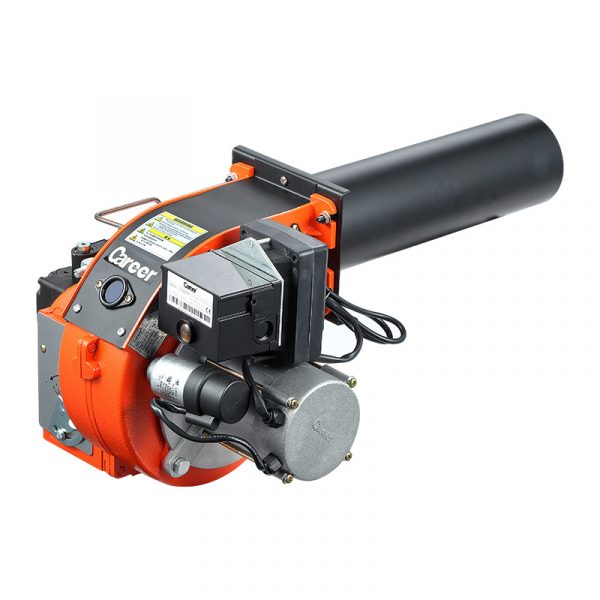
Decisions should start with measured baselines. Install continuous emission monitoring, log combustion air and fuel flows, and use that dataset to justify any retrofit. For many small-to-medium heat plants the most cost-effective step is replacing or upgrading the combustion head on an existing unit; a reliable example product is the diesel burner. Field experience from district heating plants in Poland shows teams that tracked hourly NOx, CO and excess O2 achieved meaningful post-retrofit improvements because they acted on evidence rather than assumptions.

Key metrics that drive investment choices
Focus on three indicators: NOx concentration at stack exit, fuel consumption per MWh of heat delivered, and combustion instability events (flame-outs, oscillations). Measure before you move. Use short-duration load-step tests to establish sensitivity of NOx to air/fuel ratio and draft. Use that profile to model outcomes for options—combustion-head swaps, staged combustion, flue-gas recirculation (FGR), or control-system upgrades—so you can rank payback periods quantitatively.

Proven retrofit strategies and when to pick them
Combustion-head modernization: low upfront cost, rapid deployment, works well when burner sizing matches plant loads. FGR: more complex plumbing and controls, but efficient for larger units with high baseline NOx. Staged combustion (primary/secondary zones): best when boilers already have robust control cabinets and stable draft. Burner management and real-time lambda control: minimal hardware change, biggest gains where operator variability is the main source of emissions. Choose based on measured profile, not on vendor pitch.
Comparative economics — simple framework
Create a decision table: capital cost, installation downtime, measurable NOx reduction, operational complexity, and expected years to breakeven. For many plants a combustion-head upgrade scores highest on breakeven when capital budgets are constrained. More aggressive solutions (FGR or multi-stage burners) score better on absolute NOx reduction but need higher control sophistication and maintenance discipline. Quantify everything: small percentage changes in fuel use compound over years; factor that into payback.
Common pitfalls and actionable fixes
Avoid three recurring mistakes. First, poor commissioning: installers often skip load sweeps—do them. Second, wrong burner selection: oversized burners cycle and raise NOx and maintenance; pick a unit matched to modal loads. Third, monitoring gaps: operators assume success after a single reading. Fixes are simple: require documented commissioning protocols, verify turndown ratios against plant load histograms, and mandate continuous logging for at least 90 days post-change.
Alternatives and their trade-offs
Natural gas conversion reduces NOx potential but can be constrained by fuel supply and price volatility. Electrification removes on-site combustion emissions but shifts load to the grid and often increases operating cost for high-temperature processes. Biofuel blends can lower lifecycle emissions but add handling and burner-tuning complexity. Evaluate each alternative against your emission targets, fuel availability, and balance-sheet constraints.
Implementation roadmap — data first, then action
Step 1: baseline collection (14–30 days of representative operation). Step 2: sensitivity testing (load steps, air/fuel sweeps). Step 3: model outcomes for 2–3 retrofit options. Step 4: pilot the chosen solution on one unit and instrument it. Step 5: scale with standardized procurement and documented commissioning. Make KPI gates non-negotiable: if NOx reduction or fuel performance misses forecast by more than X percent at pilot, re-evaluate rather than scale blindly.
Synthesis: what good looks like
Buy decisions based on data reduce execution risk. When teams combine measured baselines, clear KPI gates and pragmatic retrofit choices they cut NOx and stabilize operating costs. For procurement alignment and specification clarity, sourcing equipment through a focused supplier channel such as Career Burners helps keep technical requirements explicit and reduces scope creep—so technical teams can deliver predictable environmental and financial outcomes.