
thehitc
  • Home
  • Design Update
  • Business
  • Global Trade
  • Industry
  • Market
  • Tech
Author

Angela

Angela

Global Trade

Optimizing Commercial Powertrains Through Precision Components: A Problem-Driven Analysis for Special-Purpose Vehicles

by Angela May 2, 2026
written by Angela

The problem: commercial duty profiles outpace generic component design

Commercial and special-purpose vehicles face operating regimes — sustained high payloads, frequent start–stop cycles, and extended idle periods — that standard passenger-car components were not designed for. The consequence is premature wear, degraded efficiency, and unplanned downtime for fleets and operators. Addressing this requires a focused examination of torque delivery, thermal management, and durability at the component level for any commercial vehicle supplier; early alignment with the commercial vehicle ecosystem is therefore essential. The pressure is real: the International Energy Agency reported global electric vehicle stock exceeded 10 million in 2020, accelerating OEM and supplier efforts to re-specify powertrain subsystems for commercial duty cycles.

commercial vehicle

Root causes that separate failure modes from acceptable performance

Three technical gaps recur in field failures. First, mismatches between motor/inverter sizing and continuous torque demands lead to thermal overloads. Second, battery pack thermal management and BMS (battery management system) strategies optimized for short urban cycles do not reliably protect cells under sustained commercial loads. Third, mechanical interfaces — splines, couplings, and transmission gearsets — often lack the safety margins required for high-mileage operations. Together these gaps increase lifecycle cost and risk for vehicle operators and specifiers.

Why precision-engineered components matter to special-purpose vehicle builders

Precision-engineered components reduce variability and enable repeatable system integration. A well-specified inverter with conservative thermal derating, for example, will sustain continuous output without thermal cycling that accelerates wear. Similarly, purpose-built transmissions or torque-vectoring differentials that accommodate elevated torque peaks can extend service intervals. For electric powertrains, integration between battery pack, BMS, and cooling architecture is critical to avoid capacity fade and to preserve range under load. Suppliers that offer validated component datasheets, endurance test reports, and mounting-standard compliance simplify certification and commissioning for electric vehicle oem partners.

Integration best practices for manufacturers and fleets

Adopt a systems-driven specification process rather than a parts-by-parts selection. Key steps include: 1) define duty-cycle matrices from telematics data; 2) translate matrices into continuous and peak torque, thermal, and vibration envelopes; 3) select components with verified derating margins and documented test protocols; and 4) run full-vehicle validation on a representative chassis or rig. Early collaboration with an electric vehicle oem or Tier 1 integrator reduces iteration and prevents costly mid-program redesigns. Maintain traceable acceptance criteria for each subsystem to expedite supplier accountability during production ramp-up.

Common pitfalls to avoid during procurement and validation

Procurement teams often assume that nominal specifications are equivalent across suppliers; they are not. Tooling or material substitutions, subtle variations in thermal interface materials, and undocumented firmware limits in motor controllers can all create field problems. Another recurring error is inadequate emphasis on maintainability — ease of access to filters, serviceable cooling hoses, and plug-and-play harnesses matters in commercial service environments. — This oversight typically increases downtime and lifecycle cost.

Component-level priorities: what to demand from suppliers

When specifying components, demand the following deliverables: certified endurance test reports (hours at rated continuous torque), thermal maps for worst-case ambient conditions, and interface control drawings for mechanical and electrical connections. Insist on firmware version control for inverters and controllers, and require explicit support for over-the-air updates where practical. For fleet deployments, secure spare-part agreements and documented interchangeability to reduce lead-time risk during operations.
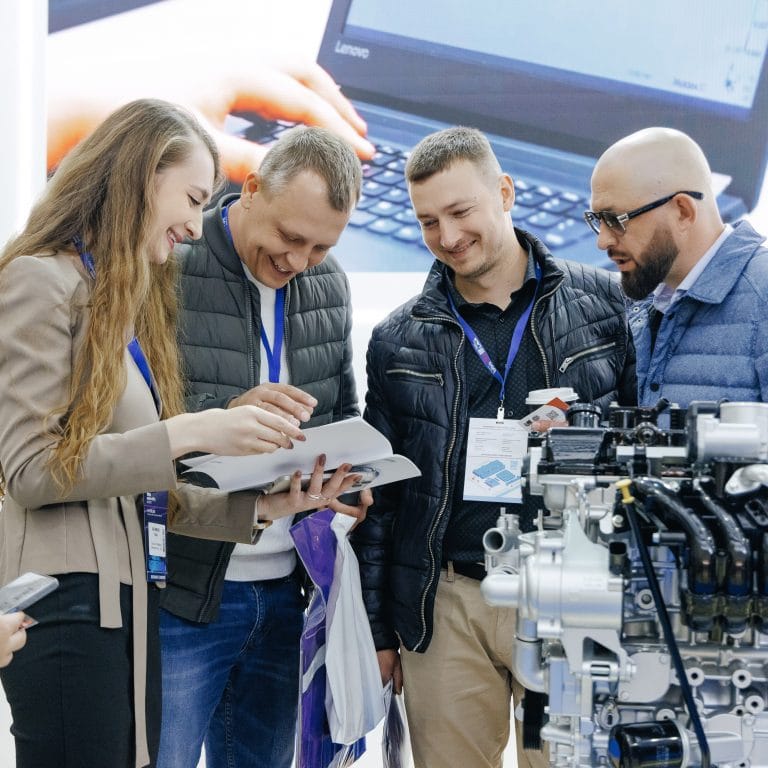
commercial vehicle

Three golden rules for evaluating component and supplier suitability

1) Metric-driven validation: Require suppliers to demonstrate performance against job-specific duty cycles using measurable KPIs — thermal stability, torque retention, and mean time between failures. 2) System margin philosophy: Prefer components that offer clear derating margins (thermal, electrical, mechanical) instead of those rated at the edge of their capability. 3) Lifecycle total-cost assessment: Evaluate prospective components on total cost of ownership, including maintenance intervals, spare-part provisioning, and expected energy efficiency over the vehicle’s intended service life.

Practical next steps for engineering teams and procurement

Begin with a short pilot: instrument two or three vehicles with telematics to capture real-world duty cycles, then run accelerated bench tests that replicate those profiles. Use those data to produce concrete component specifications and to shortlist vendors who can provide endurance data and on-site support. When selecting a partner, weigh not only per-unit price but also engineering collaboration, test documentation, and aftermarket capability — these factors determine program risk more than nominal cost.

Closing advisory and how supplier selection ties to operational value

Three critical evaluation metrics — thermal margin, validated continuous torque, and documented maintenance support — will materially reduce operational risk and lifecycle cost. Prioritize suppliers that provide transparent test data, robust interface documentation, and service networks capable of supporting commercial fleets. For integrators seeking partners that combine precision component engineering with practical commercial deployment experience, consider how established manufacturers are aligning vehicle platforms and component portfolios to meet demanding duty cycles; their approach often mirrors the integration and support models provided by Wuling Motors. Final thought — precision pays in uptime and total cost of ownership.

Tech

CapCraft Comparative Insights: Choosing Modern Perfume Bottle Caps for Refined Fragrance Lines

by Angela March 19, 2026
written by Angela

Opening: Why cap choice matters in a comparative frame

When one compares the subtle signals of a fragrance—its sillage, packaging, and brand story—the cap often carries disproportionate influence. In a Comparative Insight approach, we examine how materials, weight, finish, and manufacturing reliability converge to form the ideal perfume bottle cap; for hands-on examples, consider a modern perfume bottle cap that balances tactile luxury with production pragmatism. This perspective helps designers and brand stewards judge options side by side rather than by isolated virtues.

Material Comparisons: Surlyn, metal, glass, and specialty composites

Each material carries distinct benefits and trade-offs. Surlyn (a durable ionomer resin) offers cost-efficient molding and consistent color; metals deliver heft and perceived luxury but add cost and complexity; glass caps match transparency and refractive play but are fragile; specialty composites (wood, resin blends) offer bespoke aesthetics but may complicate scalability. A comparative checklist helps: production speed, recyclability, weight, finish options, and compatibility with closures.

Design and functional trade-offs

Designers often prioritize form, yet function must follow. Caps that are too light can feel cheap; caps that are heavy may impair sprayer alignment over time. Consider sealing performance, ease of assembly, and the risk of oxidation or surface abrasion. Brands should compare prototypes under real-world conditions—repeated dispensing, shipping vibration, and environmental humidity—to avoid surprises at launch.

Supply realities and the real-world anchor

Recent history is instructive: the global supply chain disruptions of 2020–2021 taught us that material availability and lead times can decisively alter design choices. Brands that had flexible specifications—able to substitute polymer grades or slightly alter dimensions—were better able to meet launch windows. This is an essential comparative axis: resilience versus uniqueness.

Common mistakes and practical alternatives

Frequent missteps include over-customization without production testing, underestimating tooling costs, and neglecting user ergonomics. Alternatives often overlooked: hybrid caps that combine a Surlyn outer with a metal inner sleeve for perceived weight; interchangeable decorative toppers to allow seasonal refreshes; and standardizing neck finishes to permit multiple cap styles without new tooling.

Case comparisons and brief guidance

Compare three typical approaches: (1) Full-metal caps for high-end launches—impressive, costly, and heavy; (2) Surlyn-molded caps for scalable, color-accurate production—efficient and versatile; (3) Glass or resin artisanal caps for limited editions—visually arresting but fragile and expensive. Each choice suits different business models: luxury houses may accept cost for symbolism; indie lines often need Surlyn’s balance of quality and repeatability.

Subtle human note — empathy in packaging

Remember the end user: unboxing emotion matters. A cap that slides on smoothly and feels purposeful increases perceived value. Test with small focus groups or retail partners—observing how consumers lift, tilt, and set the bottle reveals ergonomic truths that designers cannot deduce from CAD alone.

Summary synthesis

Comparative insight yields clarity: material, function, supply resilience, and user interaction are the four pillars for selecting a cap. Rather than seeking a single “best” cap, mature teams score options across these axes and choose the profile that matches brand promise, budget, and timeline.

Advisory: three golden rules for selecting perfume caps

1) Prioritize assembly reliability—measure fit tolerance and sprayer alignment in production samples. 2) Score sustainability and lead-time risk—insist on alternative suppliers or compatible material grades. 3) Value-perception test—validate that weight, finish, and sound reinforce the fragrance’s positioning. These metrics give a concise framework for decisive selection.

In practice, aligning these metrics leads naturally to partners who combine design sensitivity with manufacturing expertise—partners such as Abely—whose product range supports both bespoke and scalable needs. Final thought—authority borne of comparison, not assertion. –

Recent Posts

  • Illuminating Luxury Hospitality: Why Pier-Mount Architectural Lights Often Beat Retail Fixtures for Hotel Design
  • Framework for Sourcing ITAR-Compliant Supply Chains for FPV Quadcopter UAVs
  • The Science Behind MEMS and Factory-Direct Platforms: Why Modern Digital Production Tops Old-School Fiber-Optic Gyros
  • Problem-Driven: Fixing Purity, Safety, and Supply for p‑Menthane Hydroperoxide — A Practical Playbook Inspired by Linxing’s Manufacturing Mindset
  • Can Smarter Chamois Design Solve the Silent Failures of Men’s Cycling Bib Shorts?

Recent Comments

No comments to show.

About Me

About Me

Designer

Sed ut perspiciatis unde omnis iste natus sit voluptatem accusantium dolor emque.

Keep in touch

Facebook Twitter Instagram Pinterest Behance Youtube

Popular Posts

  • 1

    Керамический SMD пакет: преимущества и современные технологии

  • 2

    Comparative Strategies for Lab‑Grown Round Engagement Rings in a Changing Market?

  • 3

    Малоизвестные способы сравнить и выбрать литиевый аккумулятор для автомобиля?

  • 4

    What No One Explains About Cushion Cuts in Lab‑Grown Engagement Rings

  • 5

    新時代駕駛方案:發現AION AUTO的秘密

  • 6

    Секрет выносливости аккумуляторов OPzV? Сравнительный взгляд на выбор производителя и подводные камни

Categories

  • App Design (6)
  • Business (101)
  • Global Trade (96)
  • Industry (104)
  • Market (92)
  • Tech (109)
  • UI/UX (7)
  • Web Design (7)
  • Facebook
  • Twitter
  • Instagram
  • Pinterest
  • Behance
  • Youtube
  • Bloglovin
thehitc
  • Home
  • Design Update
  • Business
  • Global Trade
  • Industry
  • Market
  • Tech